
UK CITY GUIDE
Study in Portsmouth
Portsmouth is a major south coast naval city and one of the most distinctive UK student cities — the only island city in England, the historic home of the Royal Navy, and home of the University of Portsmouth, which consistently ranks among the UK universities with the highest student satisfaction scores. With around 30,000 students in a city of 210,000 people on Portsea Island, Portsmouth combines a substantial student community with extraordinary maritime heritage, the gateway to the Isle of Wight, and one of the most attractive seaside settings of any UK city. For international students, Portsmouth offers a credible combination of academic quality, lower cost than London or Brighton, exceptional waterside lifestyle, and fast rail access to the capital. AEN works with the University of Portsmouth and with partner pathway providers in the region.
100 courses currently available in Portsmouth — browse them all →
Quick facts about Portsmouth
Why study in Portsmouth?
The University of Portsmouth is a modern teaching and research university consistently ranked among the highest UK universities for student satisfaction, with particular strengths in computing, engineering, marine sciences, business, criminology, forensic sciences, sport and the health sciences. The university's compact campus in the heart of the city centre — within walking distance of the historic dockyard, the harbour and the Spinnaker Tower — gives students an unusually integrated city-and-campus experience. The Faculty of Technology runs the largest engineering and computing provision on the south coast, and the cosmology and gravitational waves research group has been involved in landmark astrophysics discoveries. AEN works with the University of Portsmouth and with partner pathway providers in the region offering Foundation Year, Undergraduate Diploma and Pre-Masters routes that lead students into University of Portsmouth degrees and the wider UK network. Our Portsmouth placements focus on Computing, Engineering, Marine Sciences, Business and Health and Social Care routes, where the university's strengths and the regional economy align most clearly. The defence, technology and maritime sectors all recruit Portsmouth graduates locally.
Cost of living
Portsmouth is more affordable than London, Brighton or Bournemouth but more expensive than midlands or northern cities. For 2026, budget £900-£1,150 a month. A room in a shared house in Southsea or Fratton typically costs £500-£700, while purpose-built student accommodation close to the University of Portsmouth campus runs £600-£850 a month with bills included. Food shopping at Lidl, Aldi or Charlotte Street Market is around £150-£200 a month — fresh seafood is particularly affordable given the city's location. Local transport on First Bus and Stagecoach South costs around £40 a month with a 4-week student pass, but Portsmouth is unusually compact and most students walk or cycle. Mobile, broadband (often included in PBSA), gym and books add £70-£100. Social spending of £110-£170 covers eating out, the Southsea seafront pubs and bars, cinema, weekend trips to the Isle of Wight or the South Downs, and nights out. Part-time work in the city's substantial hospitality, retail and customer service sectors is widely available.
Where to live as a student
Southsea
Southsea is Portsmouth's most popular student neighbourhood, immediately south of the university campus on the seafront — Victorian terraces, the lively Albert Road and Osborne Road with cafes, pubs and independent shops, and the South Parade Pier and Southsea beach a few minutes away. Rooms in shared houses typically £500-£700 a month, with PBSA on the edges slightly higher. Easily one of the most attractive student areas in any UK city thanks to the seafront setting.
Fratton
Fratton, immediately east of the university campus, is more affordable than Southsea — rows of Victorian terraces and quick walking or cycling access to lectures. Rooms in shared houses typically £400-£550 a month, making this one of the better-value student areas. Fratton Park (Portsmouth Football Club's ground) is here, and the atmosphere is more local and less student-dominated than Southsea. Suits students who want a calmer, more affordable base near the campus.
North End
North End, further north up the island, is a residential area with good local shops, supermarkets and bus connections into the centre. Rooms in shared houses typically £400-£550 a month, with the area particularly popular with second/third-year students who have made friends and want to share a proper house rather than live in halls. A 10-15 minute bus or 25-minute walk to the campus.
Getting around
Portsmouth is one of the most compact UK cities and is unusually walkable and cycle-friendly. The city centre, the University of Portsmouth campus, the historic dockyard and Southsea seafront are all within a 15-20 minute walk of each other, and most student accommodation is close enough to lectures that buses are rarely necessary. The bus network — First Bus and Stagecoach South — covers the wider city and the South Hampshire area, with a 4-week student pass costing around £40. Portsmouth has two main railway stations: Portsmouth and Southsea (in the city centre) and Portsmouth Harbour (at the waterfront, with ferries to the Isle of Wight). Direct South Western Railway services run to London Waterloo in 1h 35m, with trains every 15-30 minutes. The Isle of Wight is 20-50 minutes away by ferry, hovercraft or catamaran — a uniquely Portsmouth feature. Cycling is genuinely practical thanks to the flat island terrain and growing network of dedicated cycle lanes. Southampton Airport is 30 minutes by train, and Gatwick is about 1h 30m for European flights.
Student life in Portsmouth
Portsmouth's student life is shaped by the sea and the compact island geography. The Southsea seafront is the heart of student social life — Albert Road and Osborne Road have a famously strong concentration of cafes, bars and independent restaurants, and the seafront itself with Southsea Castle, the South Parade Pier and the Common offers easy outdoor space. The historic Old Portsmouth and Spice Island area provides a more traditional pub scene, with the Spinnaker Tower and Gunwharf Quays nearby for modern dining and shopping. The food scene has improved substantially with strong seafood restaurants, growing South Asian and Mediterranean cuisines, and the famous Charlotte Street Market in the city centre. Nightlife is concentrated in Guildhall Walk in the city centre and around Albert Road in Southsea — credible if not on the scale of Manchester or Leeds. Sport is central: Portsmouth FC at Fratton Park returned to League One in recent years, the city's sailing scene is exceptional, and surfing is accessible at nearby beaches. The South Downs National Park is 30 minutes away for hiking, the Isle of Wight is a quick ferry trip away for weekend exploration, and the New Forest is an hour west. The University of Portsmouth has a strong student union and well-developed sports clubs, including water sports that are unusually accessible given the city's location.
Famous landmarks & things to see
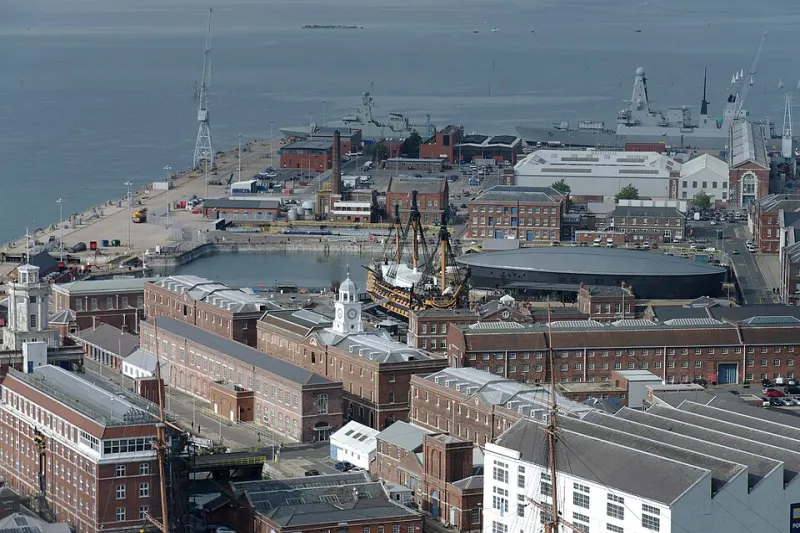
Portsmouth Historic Dockyard
The UK's most important naval heritage site, home to HMS Victory (Nelson's flagship at Trafalgar), HMS Warrior, the Mary Rose (Henry VIII's flagship raised from the seabed in 1982) and the National Museum of the Royal Navy — a full day's exploration.
Photo: Wikimedia Commons
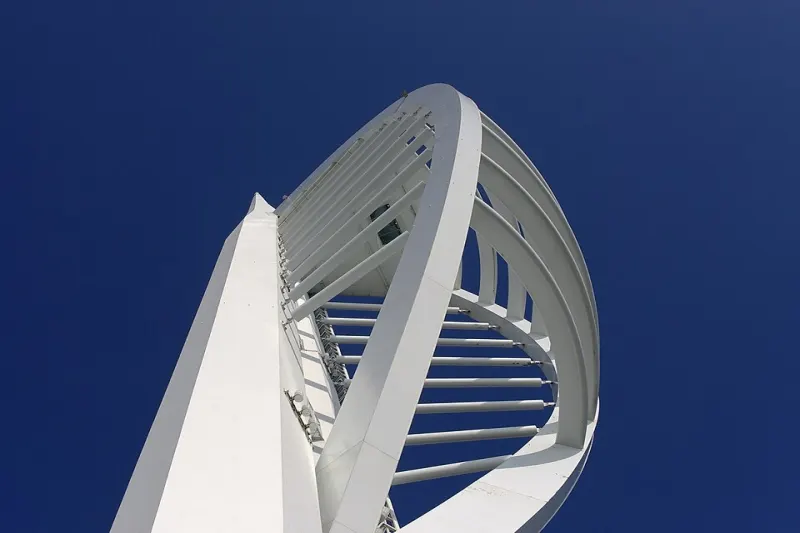
Spinnaker Tower
A 170-metre landmark on the Portsmouth waterfront with three viewing platforms offering panoramic views over Portsmouth Harbour, the Solent and the Isle of Wight — one of the most distinctive pieces of British architecture of the 21st century.
Photo: Wikimedia Commons
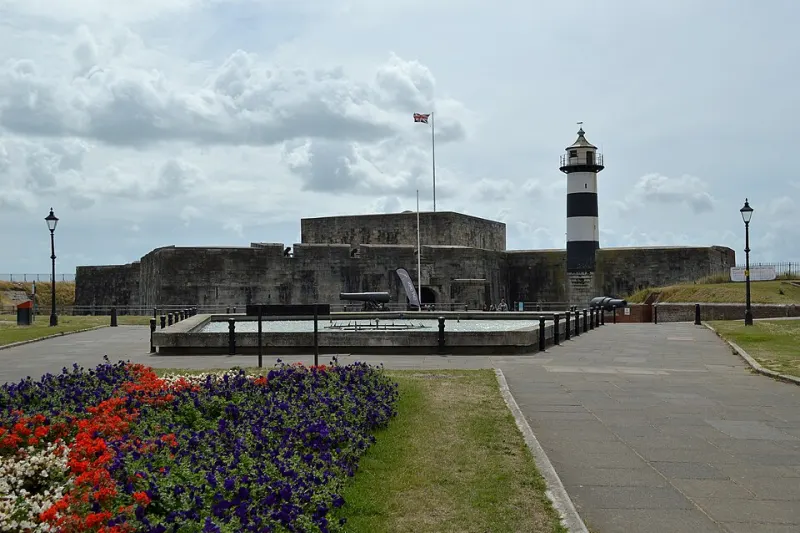
Southsea Castle
A Tudor coastal fort built in 1544 by Henry VIII to defend the Solent, set on the Southsea seafront with views over the Spit Sand and the Isle of Wight — free to visit and a popular meeting point for students.
Photo: Wikimedia Commons
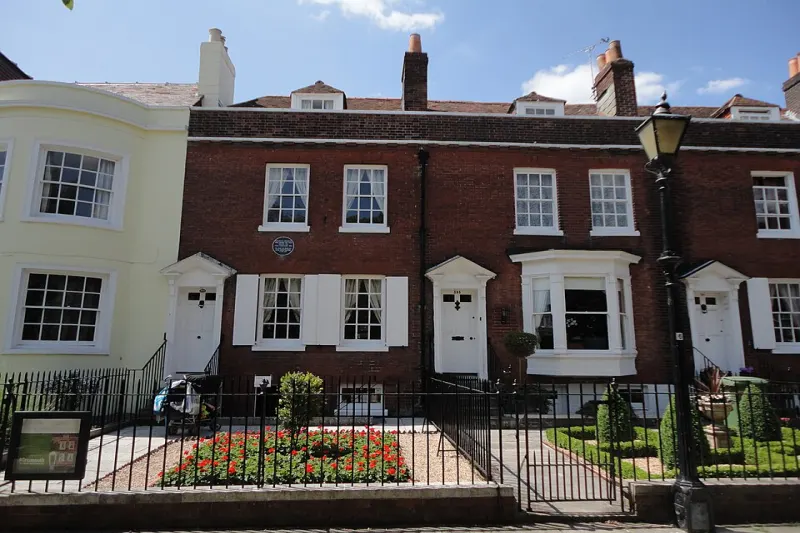
Charles Dickens' Birthplace Museum
The Georgian terrace house in Old Commercial Road where Charles Dickens was born in 1812, restored as a museum telling the story of his early life — one of the city's most distinctive literary heritage attractions.
Photo: Wikimedia Commons
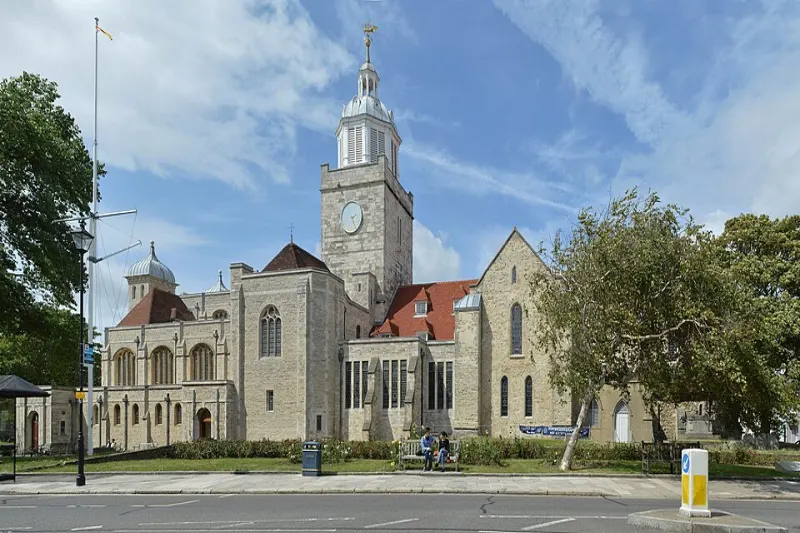
Portsmouth Cathedral
A working Anglican cathedral on the Old Portsmouth waterfront, originally a 12th-century chapel and expanded over the centuries — its Norman tower remains and the cathedral's setting on the harbour is one of the most picturesque in southern England.
Photo: Wikimedia Commons
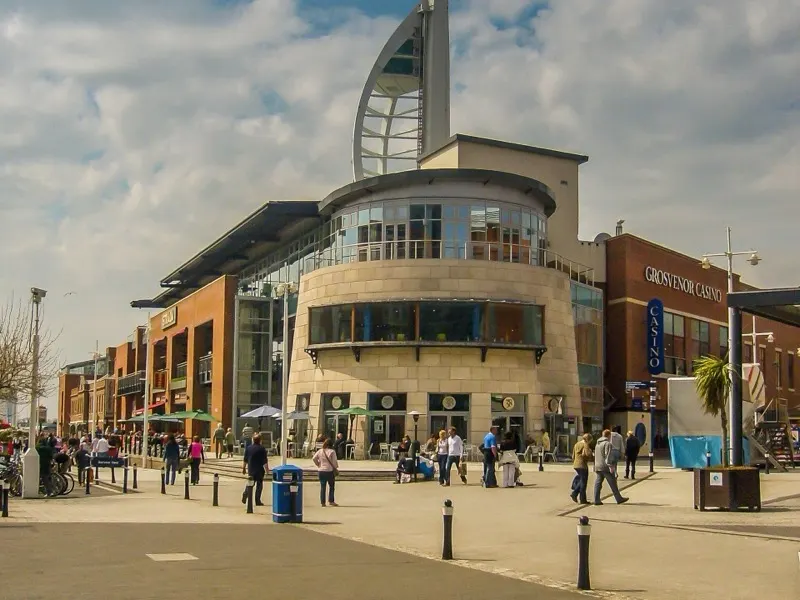
Gunwharf Quays
A modern outlet shopping, dining and entertainment complex on the waterfront beside the Spinnaker Tower. Designer outlet stores, restaurants overlooking the harbour and an open-air square that hosts events year-round — Portsmouth's main social hub for students and visitors.
Photo: Wikimedia Commons
Major industries & employers
Defence and maritime
BAE Systems Maritime has its naval shipbuilding base in Portsmouth and the Royal Navy maintains a substantial presence at HMNB Portsmouth, where ships including HMS Queen Elizabeth and HMS Prince of Wales are based — together making defence and maritime industries the city's largest employer.
Marine engineering
Beyond defence, Portsmouth has a substantial commercial marine engineering sector including ferry operators (Brittany Ferries, Wightlink, Hovertravel), commercial shipping and a growing marine technology cluster.
Technology and IT services
IBM UK has a major Portsmouth office that has been one of the city's largest private-sector employers for decades, alongside a wider cluster of IT services, cybersecurity and software firms across the city.
Tourism and hospitality
Portsmouth's naval heritage, Spinnaker Tower, Southsea beach and the gateway to the Isle of Wight make it one of the leading tourism destinations on the south coast, supporting hospitality and visitor economy jobs.
Education and research
The University of Portsmouth itself is one of the city's largest employers, and growing collaborations with the defence sector and BAE Systems are creating research partnerships of national significance.
Insurance and financial services
Portsmouth hosts the regional headquarters of Zurich Insurance, RSA and several other major insurers, employing thousands of graduates across underwriting, actuarial and claims roles.
Annual events & festivals
Portsmouth International Kite Festival
August
One of Europe's largest kite festivals, held on Southsea Common over a weekend each summer with elaborate kite displays, stunt teams and family activities — a free event drawing tens of thousands of visitors.
Victorious Festival
August Bank Holiday weekend
A major music festival held on Southsea seafront over three days, featuring around 80,000 attendees a day and headliners from across British rock, indie, pop and dance — one of the leading south coast music events.
Portsmouth Comic Con
May
A growing comic-book and pop-culture convention held at the Portsmouth Guildhall with guests from film, television and comics — a fixture of the spring student calendar.
Great South Run
October
A 10-mile road race through the streets of Portsmouth and Southsea, attracting around 25,000 runners and elite international athletes — one of the largest UK road races and one of the city's defining annual events.
D-Day Anniversary Commemorations
Early June
Portsmouth, as the main embarkation point for the D-Day landings, holds annual commemorations including events at the D-Day Story museum and on Southsea Common.
Portsmouth Festival of Christmas
Late November
Family-focused festive event on Southsea Common with a Victorian-style Christmas market, lights and entertainment, kicking off the city's festive season.
Top subjects in Portsmouth
Computing & Cybersecurity
The University of Portsmouth has the largest computing provision on the south coast and growing collaborations with BAE Systems, the defence sector and the wider UK technology economy — strong graduate routes for international students.
Engineering
Portsmouth's defence, maritime and aerospace heritage continues through BAE Systems Maritime, the Royal Navy and a wider South Coast engineering supply chain — substantial placement opportunities for engineering students.
Marine Sciences
The University of Portsmouth's marine and environmental sciences programmes benefit from the city's coastal setting and the wider South Coast marine research community, including links to Southampton's National Oceanography Centre.
Business & Management
Portsmouth Business School runs well-regarded programmes with strong industry links across the South Coast economy and easy access to London for placements via direct trains.
Health & Social Care
Portsmouth Hospitals University NHS Trust and the wider Hampshire health system provide substantial clinical placement environments for the University of Portsmouth's nursing and allied health programmes.
FAQ — studying in Portsmouth
Why is the University of Portsmouth highly rated despite being smaller than some UK universities?
The University of Portsmouth consistently ranks among the highest UK universities for student satisfaction, particularly in the National Student Survey — and this matters more for many international students than overall research rankings. The university has invested heavily in modern teaching facilities, student support services and the compact city-centre campus environment, with the result that students consistently report feeling well-supported and well-taught. The university also has genuine research strengths in specific areas — cosmology and gravitational waves, marine sciences, computing — that punch well above its weight. For international students choosing between universities, the combination of strong teaching, an integrated city environment and waterside location often makes Portsmouth a better fit than nominally higher-ranked but less student-focused alternatives. AEN's pathway routes offer access to this environment through Foundation Year, International Year One and Pre-Masters programmes.
Which Portsmouth institutions does AEN work with?
AEN works with the University of Portsmouth and with partner pathway providers in the region offering Foundation Year, Undergraduate Diploma and Pre-Masters programmes leading into University of Portsmouth degrees and the wider UK university network. Our Portsmouth placements focus primarily on Computing, Engineering, Marine Sciences, Business and Health and Social Care routes, where the university's strengths and regional employer demand align most clearly. We can guide you through the application, accommodation and visa process end-to-end. Please contact our admissions team for the most current list of Portsmouth courses, intakes and available pathway providers.
Is Portsmouth really an island and does that matter for students?
Yes — Portsmouth is the only island city in England. The city centre and most of Portsmouth itself sit on Portsea Island, separated from the mainland by Portsbridge Creek and connected by three road bridges and the railway line. In practical terms this means the city is unusually compact (you can walk across most of Portsea Island in 40 minutes), the geography is flat (good for cycling), and the sea is genuinely close to every part of the city. For students this gives Portsmouth a distinctive identity and a strong sense of place — the seafront is a few minutes from the campus, the Isle of Wight ferries are visible from many parts of the city, and the maritime culture is integrated into daily life. The downside is occasional traffic congestion on the bridges, but this affects students less than commuters.
How does Portsmouth compare to Brighton or Bournemouth as a south coast student city?
Portsmouth is meaningfully more affordable than Brighton (typically 20-30% cheaper on rent), and somewhat cheaper than Bournemouth. Brighton has a stronger nightlife and arts scene, but Portsmouth has more world-class heritage (the Historic Dockyard, HMS Victory, the Mary Rose), a more genuinely maritime setting and stronger engineering and computing programmes through the University of Portsmouth. Bournemouth is a more conventional seaside resort with strong beach access and Bournemouth University has its own strengths in media and tourism. For international students, the choice between the three south coast destinations often comes down to subject specialism and lifestyle preference: Portsmouth for engineering, computing and maritime focus alongside affordability; Brighton for arts, design and a lively cultural scene; Bournemouth for tourism, media and beachfront resort lifestyle. All three give faster rail access to London than midlands or northern cities.
Your next step
Ready to start your application in Portsmouth?
Talk to an AEN advisor — we'll match you to the right course, check your eligibility, and walk you through the application step by step.
- Completely free for students
- British Council certified advisors
- 7 days a week, 14 languages
Average response time: under 30 minutes during business hours.