
UK CITY GUIDE
Study in Birmingham
Birmingham is England's second city — younger, faster-growing and noticeably more affordable than London. The city's metropolitan population of around 1.1 million includes more than 80,000 students attending the University of Birmingham, Aston, Birmingham City University, Newman and a cluster of specialist colleges. It is one of the most culturally diverse cities in the UK, with strong South Asian, Caribbean, Polish and East African communities shaping its food, music and neighbourhoods. For international students looking for a major-city experience with friendlier rents, faster commutes and a substantial graduate employment market, Birmingham is increasingly the answer.
79 courses currently available in Birmingham — browse them all →
Quick facts about Birmingham
Why study in Birmingham?
Birmingham is anchored by the University of Birmingham, a Russell Group research university consistently ranked in the UK top 20, with strengths in engineering, medicine, business and the sciences. Aston University specialises in engineering, business and applied science with strong graduate-employment outcomes; Birmingham City University has built a national reputation in music, media, nursing and the creative arts; and Newman University focuses on education, social sciences and theology. AEN works with partner colleges in Birmingham including LCCA Birmingham, offering Foundation Year, HNC/HND and pathway programmes that can lead into degree-level study. What sets Birmingham apart is the combination of academic depth and industrial heritage. The city is the headquarters of HSBC UK, home to Jaguar Land Rover's engineering base, and a major centre for advanced manufacturing, fintech and the NHS — meaning real internships and graduate roles are within reach. The compact city centre, with Brindleyplace, the Bullring and Digbeth all within a 15-minute walk, makes the city feel smaller and more navigable than its scale would suggest, which many international students find easier to settle into than London.
Cost of living
Birmingham is one of the most affordable big cities in the UK to study in. For 2026, budget £850-£1,100 a month including rent. A room in a shared house in Selly Oak or Edgbaston typically costs £450-£650, while purpose-built student accommodation closer to the centre runs £600-£850 a month with bills included. Food shopping at Lidl, Aldi or one of Birmingham's excellent halal supermarkets comes in at £150-£200 a month. The city has its own integrated transport network — a 4-week n-bus student pass costs roughly £55, and the West Midlands Metro tram is included on multi-modal passes. Mobile, broadband and gym typically add £60-£90. Social spending of £100-£200 covers eating out, cinema, concerts in Digbeth and weekend trips, with rates noticeably lower than London. Part-time work during term contributes meaningfully to this budget.
Where to live as a student
Selly Oak
Selly Oak is Birmingham's main student neighbourhood, packed with second- and third-year University of Birmingham undergrads. The Bristol Road runs straight into campus, supermarkets and chain restaurants line the high street, and the train station puts you in the city centre in 8 minutes. Shared houses dominate the market here, typically £450-£600 per room per month including some bills.
Edgbaston
Edgbaston is the leafier neighbour next to the University of Birmingham campus, with handsome Victorian streets, the Botanical Gardens and Edgbaston Cricket Ground. Quieter and a bit more expensive than Selly Oak, it suits postgrads, mature students and those who want easy campus access without the party-house feel. Rooms typically £550-£750, with purpose-built accommodation pushing toward £850.
City Centre & Digbeth
The city centre suits students at BCU, LCCA Birmingham and Aston, all of which have campuses within walking distance. Digbeth on the southern edge is the city's creative quarter — street art, independent music venues, the Custard Factory — and increasingly popular with creative-arts students. Modern PBSA towers here typically run £700-£950 a month with bills, Wi-Fi and gym included.
Getting around
Birmingham is one of the easiest big UK cities to get around without a car. The compact city centre is fully walkable — you can cross from New Street Station to the Jewellery Quarter in 20 minutes — and the West Midlands Metro tram now links the centre to Edgbaston, the Jewellery Quarter and Wolverhampton. Buses run by National Express West Midlands form the backbone of student travel; a 4-week 18+ student pass costs around £55 and covers buses, the Metro and local trains across the network. Cycling is improving thanks to the West Midlands Cycle Hire scheme, and the canal towpaths offer traffic-free routes between Brindleyplace, the university and Selly Oak. New Street Station is a national rail hub, putting you in London in 80 minutes on Avanti West Coast, Manchester in 90 minutes, and Manchester or Edinburgh within easy reach for weekend trips.
Student life in Birmingham
Birmingham's student life is shaped by its diversity. The food scene is exceptional — Balti Triangle in Sparkbrook for South Asian, Soho Road for Caribbean, Stirchley for craft beer and indie cafes, the Bullring food halls for global street food. Music is in the city's DNA: Symphony Hall is one of Europe's best classical venues, the O2 Academy in Digbeth hosts indie and electronic gigs, and the city is a credible alternative to Manchester for nightlife. For sport, Birmingham is unusually well served — Edgbaston Cricket Ground hosts Test matches, Villa Park and St Andrew's host Premier League and Championship football, and the city's BUCS leagues are competitive across rugby, basketball, cricket and football. Parks include Cannon Hill (next to Edgbaston, with a lake and the MAC arts centre), Sutton Park (one of Europe's largest urban parks), and the Lickey Hills on the southern edge. Cultural infrastructure is strong: the Library of Birmingham is one of Europe's largest public libraries, the Birmingham Museum & Art Gallery is free, and the Birmingham Royal Ballet, City of Birmingham Symphony Orchestra and Birmingham Hippodrome anchor a deep performing-arts scene. Most students find the city friendly and easy to settle into.
Famous landmarks & things to see
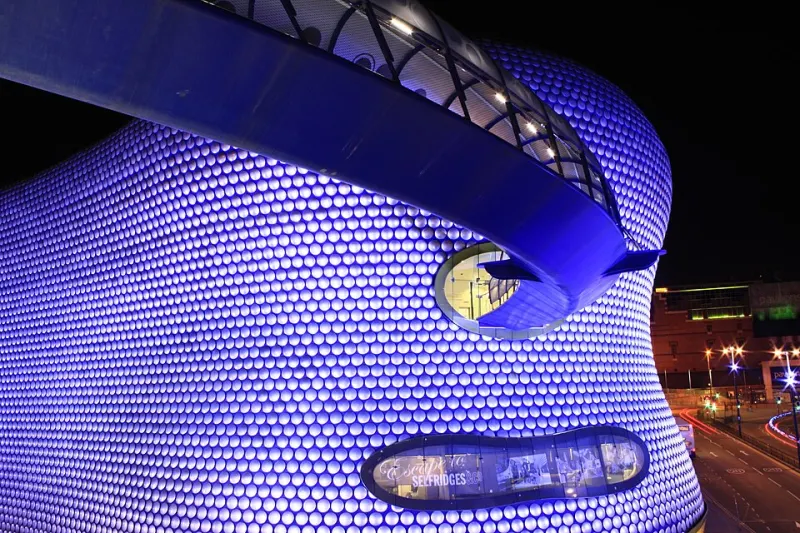
Bullring and Selfridges
The Bullring shopping centre's silver-disc-clad Selfridges building, designed by Future Systems and completed in 2003, has become one of the most recognisable pieces of contemporary British architecture.
Photo: Wikimedia Commons
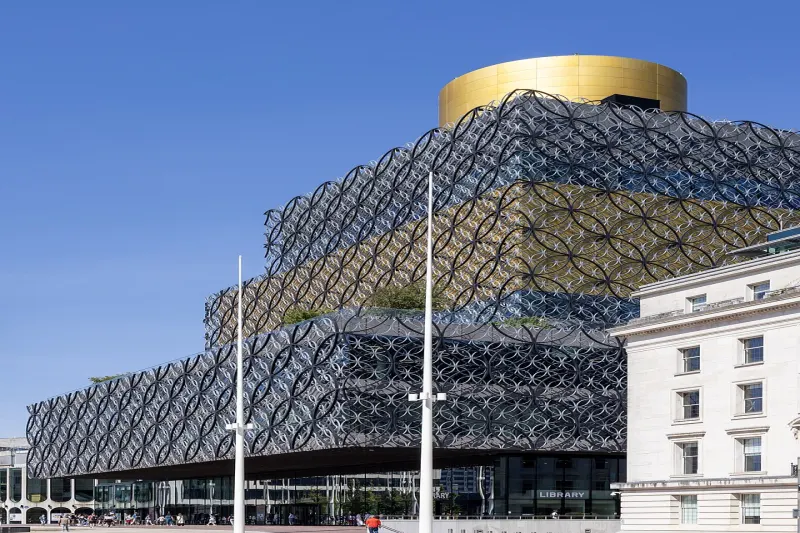
Library of Birmingham
Opened in 2013 and one of the largest public libraries in Europe, with a striking ringed facade by Dutch firm Mecanoo and a Shakespeare Memorial Room on the top floor — free to visit.
Photo: Wikimedia Commons
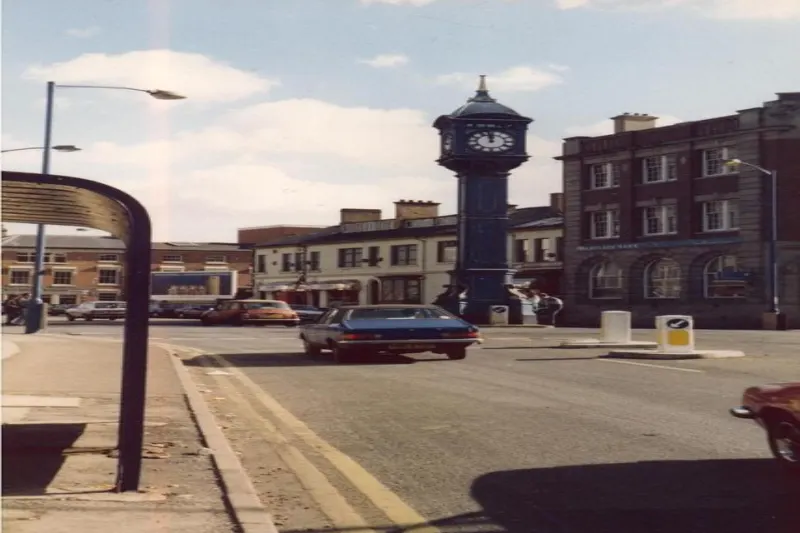
Jewellery Quarter
A historic district just north of the city centre where more than 100 jewellery and silverware businesses still operate, alongside the Pen Museum and a growing independent food and bar scene.
Photo: Wikimedia Commons
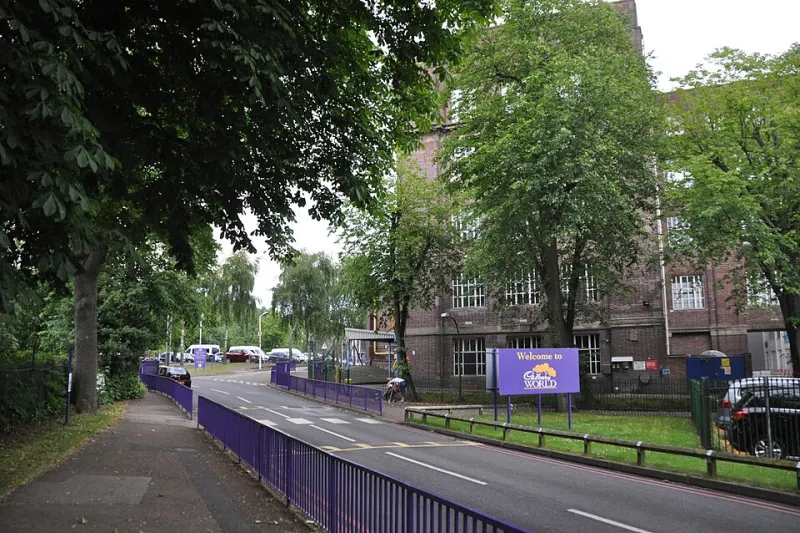
Cadbury World
On the southern edge of the city in Bournville, this working chocolate factory and visitor attraction tells the story of one of Britain's most famous brands — popular for student day trips.
Photo: Wikimedia Commons
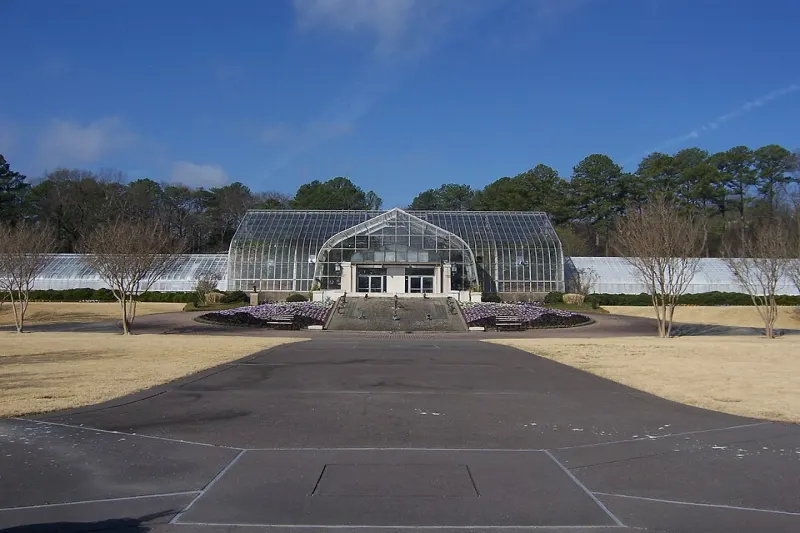
Birmingham Botanical Gardens
Fifteen acres of Victorian glasshouses and gardens in Edgbaston, a five-minute walk from the University of Birmingham, with tropical, Mediterranean and arid plant collections.
Photo: Wikimedia Commons
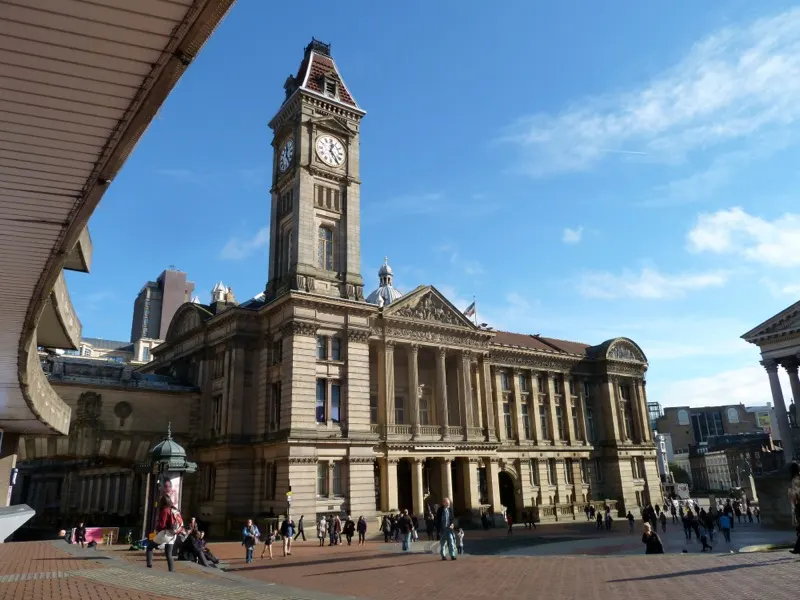
Birmingham Museum and Art Gallery
A free Victorian civic museum on Chamberlain Square housing the world's largest collection of Pre-Raphaelite art alongside Egyptian, Roman and Anglo-Saxon treasures including the Staffordshire Hoard. A short walk from most city-centre campuses.
Photo: Wikimedia Commons
Major industries & employers
Finance and professional services
HSBC UK relocated its retail bank HQ to Birmingham in 2018, joining Deutsche Bank's largest non-London UK office, PwC, KPMG and Goldman Sachs's growing Birmingham operation.
Advanced manufacturing
Jaguar Land Rover's engineering base sits just outside the city, alongside BMW's Hams Hall engine plant and a wider Midlands supply chain employing tens of thousands of graduates.
Digital and technology
The Curzon Street HS2 station and surrounding 'Big City Plan' have drawn fintech, gaming and AI scale-ups to the centre, supported by the city's universities and the Birmingham Tech Week ecosystem.
Food and drink
Birmingham has more Michelin stars than any UK city outside London and a long-established food-manufacturing base from Cadbury to Mondelez and Typhoo.
Retail and conferences
The NEC, ICC and Resorts World Arena make Birmingham the UK's biggest conference and exhibition city, with hospitality and event-management roles open to students throughout the year.
Higher education and research
Five universities and a vast research base employ tens of thousands, making Birmingham one of the UK's largest higher education clusters with strong industry partnerships in engineering and medical research.
Annual events & festivals
Birmingham Pride
Late May Bank Holiday weekend
One of the UK's largest LGBTQ+ festivals, centred on the Gay Village in Hurst Street, with a parade, two days of live music and street parties drawing more than 75,000 people.
Frankfurt Christmas Market
Mid-November to late December
The largest authentic German Christmas market outside Germany and Austria, with around 80 stalls along Victoria Square and New Street — a defining winter event for Birmingham students.
Edgbaston Test cricket
Summer (June to August)
Edgbaston Cricket Ground hosts at least one home Test match each summer and regular T20 fixtures, with student tickets among the most affordable elite-sport access in the UK.
Birmingham Weekender
September
A free city-wide arts festival showcasing performance, music, dance and visual art across central Birmingham venues — heavily attended by students at the start of the new academic year.
Birmingham International Marathon and Half Marathon
Early October
Annual road race through the city centre and Edgbaston, with thousands of competitors raising millions for local charities each year.
Mostly Jazz, Funk and Soul Festival
Mid-July
Three-day festival in Moseley Park with international jazz, soul and funk acts — a longtime fixture of Birmingham's summer calendar.
Top subjects in Birmingham
Engineering
Aston and the University of Birmingham have long-standing strengths in mechanical, automotive and chemical engineering, with industrial links to Jaguar Land Rover, BAE Systems and the wider Midlands manufacturing base.
Business & Management
Birmingham is the UK's second financial centre, with HSBC UK, Deutsche Bank and PwC operating major offices — strong placement opportunities for business and finance students.
Health & Nursing
The Queen Elizabeth Hospital is one of the largest in Europe, and BCU's nursing programmes are among the largest in the UK, giving health students real clinical exposure.
Music & Performing Arts
Birmingham Conservatoire (part of BCU) is one of the UK's leading music schools, and the city's live venues and orchestras give performing-arts students serious working environments.
Computing & Cybersecurity
The University of Birmingham hosts an Academic Centre of Excellence in Cyber Security Research, and the wider Midlands tech sector has grown rapidly with HS2 and fintech investment.
FAQ — studying in Birmingham
How does Birmingham compare to London for international students?
Birmingham is around 30-40% cheaper to live in than London, and many international students find it easier to settle into because the city is more compact and the student community is more concentrated. Academically, the University of Birmingham is Russell Group and ranks similarly to leading London universities, and AEN's partner colleges run the same kinds of Foundation Year and pathway programmes. The trade-off is scale: London has more campuses, more part-time job options and more industry headquarters, while Birmingham has shorter commutes, friendlier rents and a tight-knit student culture. For many students, especially those who want to focus on their studies in their first year, Birmingham offers a much gentler landing into the UK without sacrificing academic or career outcomes.
Which areas of Birmingham are best for students?
Selly Oak is the classic University of Birmingham student area, dominated by shared houses and bordered by the main campus on the Bristol Road. Edgbaston, just next door, is quieter and greener and suits postgrads or those who want easier campus access. The city centre and Digbeth work well for students at BCU, LCCA Birmingham and Aston University, with plenty of modern purpose-built accommodation. We generally recommend booking a PBSA room for your first year — it bundles bills, Wi-Fi and security, and you'll naturally meet other international students. From second year onwards, most students move into shared houses with friends they've made, typically in Selly Oak, Harborne or Bournbrook.
Is Birmingham a safe city for international students?
Birmingham is broadly safe for students who take normal urban-life precautions — staying aware of your surroundings late at night, using licensed taxis (Uber, Ola or local minicabs from your hall reception), and sticking to well-lit main routes after dark. Like any large city, certain neighbourhoods are quieter than others, but the main student areas (Selly Oak, Edgbaston, the city centre, parts of Digbeth) are well populated and well lit. Universities and PBSA providers all run 24-hour security on residences, and the West Midlands Police have a dedicated student safety team. We recommend registering with a local GP within your first few weeks and signing up for university safety alerts. Most international students report feeling more comfortable in Birmingham than in some larger world cities.
Can I get to other UK cities easily from Birmingham?
Yes — Birmingham is the most central UK city by rail. New Street Station and Moor Street put you in London in around 80 minutes on Avanti West Coast or Chiltern Railways, Manchester in 90 minutes, Liverpool in 100 minutes, and Cardiff or Bristol in two hours. With a 16-25 Railcard (anyone under 26 or in full-time study qualifies) you save a third on most fares. Birmingham Airport is 10 minutes from the city centre by train and serves direct flights to most European hubs and several long-haul destinations including Dubai, Delhi and Islamabad — useful for trips home. National Express coaches from Digbeth coach station offer cheaper but slower travel to almost every UK city.
Your next step
Ready to start your application in Birmingham?
Talk to an AEN advisor — we'll match you to the right course, check your eligibility, and walk you through the application step by step.
- Completely free for students
- British Council certified advisors
- 7 days a week, 14 languages
Average response time: under 30 minutes during business hours.