
UK CITY GUIDE
Study in Newcastle
Newcastle upon Tyne is the cultural and economic capital of the North East and one of the UK's most distinctive student cities. With around 60,000 students in a metropolitan area of 830,000, the city is large enough to feel like a proper city but compact enough that you can walk between the two main universities, the central nightlife strips and the Tyne quayside in 15-20 minutes. Newcastle has a reputation for warmth and friendliness, a strong industrial heritage now reinvented as a digital and creative economy, and a famously good night out. For international students, the city offers significantly lower costs than London, excellent transport and a tight-knit student community. AEN works with pathway college partners in the region offering routes into Northumbria and beyond.
11 courses currently available in Newcastle — browse them all →
Quick facts about Newcastle
Why study in Newcastle?
Newcastle is anchored by two large universities. Newcastle University is a Russell Group research-intensive institution consistently ranked in the UK top 30, with particular strengths in medicine, engineering, computing and the biosciences — its city-centre campus sits just north of Haymarket and feels integrated into the city itself. Northumbria University is one of the UK's largest universities and has built a strong national reputation in business, law, design, nursing and engineering, with main campuses at City and Coach Lane. AEN works with pathway college partners in the North East offering Foundation Year, Undergraduate Diploma and Pre-Masters programmes that lead students into Northumbria degree programmes and other UK universities. Our Newcastle placements focus on Engineering, Business and Computing routes, where the region's industrial heritage and modern digital economy create strong demand. The wider Newcastle ecosystem matters as much as the universities — Sage Group, Atom Bank, Nissan UK (in nearby Sunderland), CCP Games and Ubisoft Reflections all recruit locally, and the Newcastle Helix innovation district is one of the largest urban regeneration projects in Europe focused on digital and life sciences.
Cost of living
Newcastle is one of the most affordable big UK student cities — meaningfully cheaper than London, Manchester or Leeds for similar quality of life. For 2026, budget £800-£1,050 a month. A room in a shared house in Jesmond or Heaton typically costs £450-£650, while purpose-built student accommodation closer to the universities runs £550-£800 a month with bills included. Food shopping at Lidl, Aldi or the Grainger Market comes in at £140-£190 a month. Local transport on the Tyne and Wear Metro is around £40 a month with a 4-week Network Pop student pass that covers Metro, bus and Shields Ferry. Mobile, broadband (often included in PBSA), gym and books add £60-£90. Social spending of £100-£170 goes much further than in southern cities — Newcastle's nightlife is famously affordable. Part-time work in the city's large hospitality and retail sectors is widely available and meaningfully closes the gap.
Where to live as a student
Jesmond
Jesmond is Newcastle's classic student neighbourhood, just north of the city centre and a 10-minute walk or one Metro stop from Newcastle University. Handsome Victorian terraces, good bars (Osborne Road is famous), gym chains and a large student-focused supermarket scene. Popular with both Newcastle and Northumbria students. Rooms in shared houses typically £450-£650 a month, with PBSA in the area slightly higher — one of the better-value student zones in any UK city.
Heaton
Heaton, east of Jesmond, has a more alternative, indie character — independent cafes, vintage shops, the Chillingham Road bars and a more relaxed atmosphere than Jesmond. Rooms in shared houses typically £400-£550 a month, making this one of the most affordable student areas. A 10-minute Metro ride or 20-minute bus to both universities. Suits second/third-years and students who want a less party-focused student experience.
Sandyford
Sandyford sits between Jesmond and the city centre, very close to Northumbria University's city campus and within easy walking distance of Newcastle University. Quieter than Jesmond, with a mix of student-let terraces and modern PBSA blocks. Rooms typically £450-£600 a month in shared houses, with PBSA towers running £600-£850 with bills included — a popular choice for students who want a short walk to campus.
Getting around
Newcastle is one of the easiest UK cities to get around. The Tyne and Wear Metro — the UK's first modern light rail system, opened in 1980 — links the city centre to Newcastle Airport in 25 minutes, the universities, the Quayside, the coast and Sunderland. A 4-week Network Pop student pass covers Metro, bus and the Shields Ferry for around £40. The city centre is fully walkable in 15-20 minutes, with the two universities a 10-minute walk apart. Cycling is improving with new dedicated lanes along the Quayside and the corridors out to Heaton and Gosforth. Newcastle Central Station puts you in Edinburgh in 90 minutes on LNER, London in 2h 50m, and York in just over an hour — making weekend travel easy. Newcastle International Airport runs direct flights to most European destinations and some long-haul, and the Metro makes it one of the most accessible UK airports from a city centre.
Student life in Newcastle
Newcastle is famous for its nightlife, and the reputation is well-earned — but there is a great deal more to student life here. The Bigg Market, Diamond Strip and Quayside form three distinct nightlife strips covering everything from cheap student bars to upmarket cocktail clubs. The food scene has improved enormously in the last decade — Grainger Market for affordable global food, Stowell Street for Chinese cuisine, Osborne Road in Jesmond for student-friendly chains and independents. Sport is central to the city: Newcastle United at St James' Park sits literally in the city centre, and the Falcons rugby team and Newcastle Thunder rugby league give the city year-round elite sport. The North East coast is 25 minutes by Metro — Tynemouth and South Shields offer proper beaches, surfing and weekend walks, which is unusual for any UK city. Cultural infrastructure is exceptional for the city's size: BALTIC and the Sage Gateshead (now Glasshouse International Centre for Music) anchor a Quayside cultural cluster, the Theatre Royal hosts major touring productions, and the Tyneside Cinema is one of the UK's best independent cinemas. Northumberland — England's least populated county with rolling hills, castles and a Roman wall — is on the city's doorstep for weekend hikes.
Famous landmarks & things to see
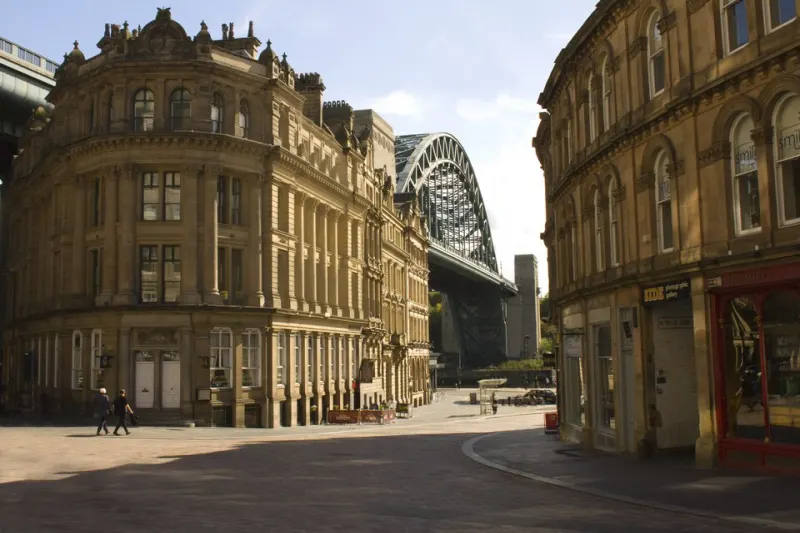
Tyne Bridge
The 1928 steel arch bridge that defines Newcastle's skyline, spanning the Tyne between Newcastle and Gateshead — the inspiration for Sydney Harbour Bridge and a defining symbol of the North East.
Photo: Wikimedia Commons

Angel of the North
Antony Gormley's 20-metre-tall steel sculpture stands on a hill in Gateshead just south of the city, with a 54-metre wingspan — one of the most-recognised public artworks in the UK, free to visit.
Photo: Wikimedia Commons
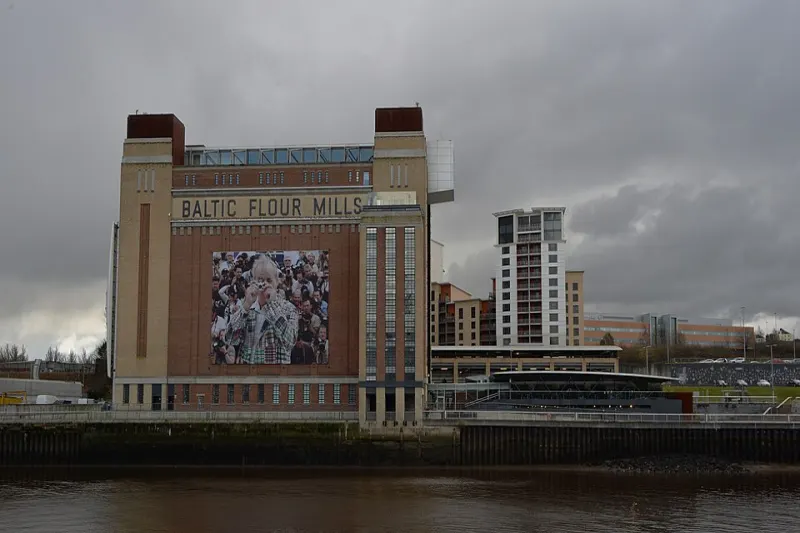
BALTIC Centre for Contemporary Art
Housed in a converted flour mill on the Gateshead Quayside, BALTIC is one of the UK's largest free contemporary art galleries with a rolling programme of major international exhibitions.
Photo: Wikimedia Commons
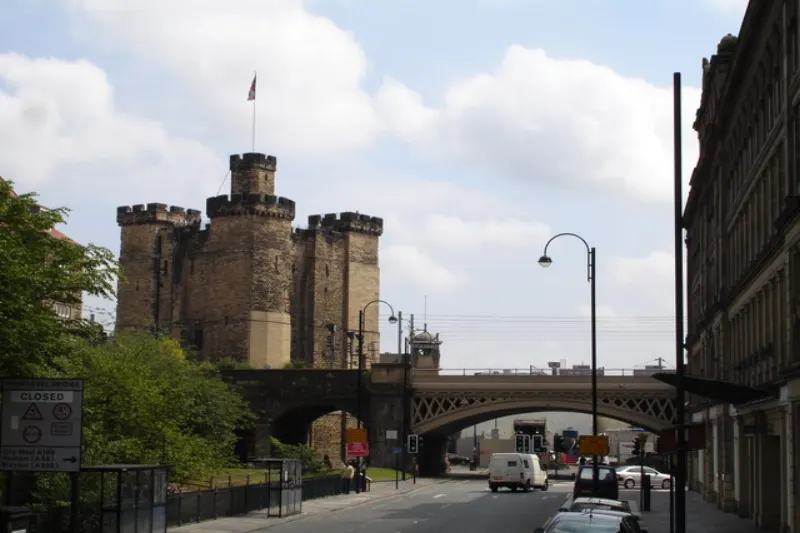
Newcastle Castle
The Norman keep and Black Gate that give the city its name, dating from the 12th century — recently redeveloped with a visitor centre and panoramic views over the Tyne.
Photo: Wikimedia Commons
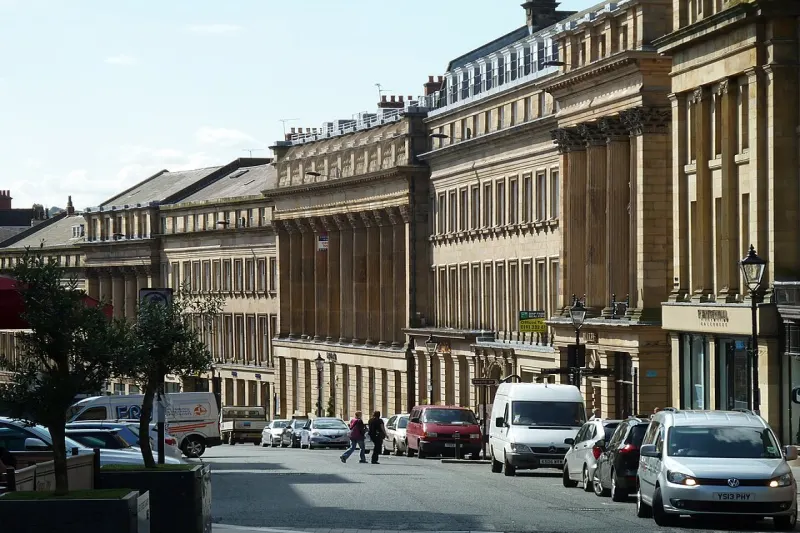
Grey Street and Grainger Town
The neoclassical heart of Newcastle, designed by Richard Grainger in the 1830s and described by John Betjeman as the finest street in England — handsome Georgian terraces full of bars, restaurants and shops.
Photo: Wikimedia Commons
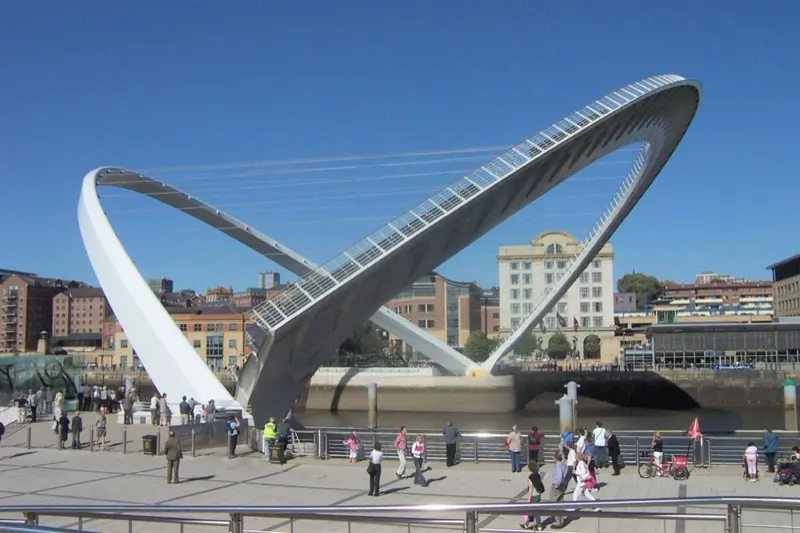
Gateshead Millennium Bridge
The world's first tilting pedestrian-and-cycling bridge, opening like a giant eye to let boats pass beneath. Connects Newcastle Quayside with the BALTIC arts centre and Sage music hall on the Gateshead side — an architectural icon of post-industrial Tyneside.
Photo: Wikimedia Commons
Major industries & employers
Digital and technology
The Newcastle Helix innovation district near the city centre brings together Newcastle University research, Sage Group (UK enterprise software), Atom Bank and a growing fintech and data analytics cluster.
Life sciences
Newcastle University is one of the UK's leading centres for ageing research, regenerative medicine and stem cell science, with the Centre for Life and the Helix anchoring a substantial biomedical sector.
Advanced manufacturing
Nissan's plant in nearby Sunderland is the largest car factory in UK history, and the wider region hosts a deep automotive and engineering supply chain employing tens of thousands across Tyne and Wear.
Creative and digital media
Newcastle and Gateshead together form one of the UK's largest creative clusters outside London, with major employers in animation, gaming (CCP Games, Ubisoft Reflections) and broadcast television.
Offshore and renewable energy
The Tyne is a significant offshore wind and subsea engineering hub, with Newcastle the centre of the North East's growing renewable energy supply chain serving North Sea projects.
Higher education
Newcastle and Northumbria universities together host 50,000+ students, anchoring a major research base in medicine, engineering and the creative arts.
Annual events & festivals
Great North Run
September
The world's biggest half-marathon, run between Newcastle and South Shields each September with 60,000 participants — one of the most significant sporting events in the UK calendar.
Lumiere Festival
November (biennial)
The UK's largest light festival, held in Durham just south of Newcastle but heavily attended by students, with large-scale outdoor light installations from international artists.
This is Tomorrow Festival
May
An annual music festival at Newcastle's Exhibition Park with major indie, rock and pop headliners — a fixture of the spring student calendar.
Mouth of the Tyne Festival
July
A weekend music festival in nearby Tynemouth and South Shields with major headliners and views over the river mouth, alongside food stalls and family events.
The Hoppings
Late June
One of Europe's largest travelling funfairs, set up on the Town Moor for ten days with 250+ rides, stalls and entertainment.
Newcastle Restaurant Week
Twice yearly (January and August)
A citywide promotional week with 130+ restaurants offering fixed-price menus, championed by the NE1 Business Improvement District.
Top subjects in Newcastle
Engineering
Newcastle University has strong civil, mechanical and marine engineering programmes, with industrial links to the offshore energy sector, Nissan UK and the wider North East manufacturing base.
Business & Management
Northumbria's Newcastle Business School and Newcastle University's business school both have strong national reputations, and the city's growing digital, fintech and creative sectors create placement opportunities.
Computing & Data
Sage Group (UK enterprise software giant), Atom Bank and the Helix innovation district make Newcastle a real digital employment market, with both universities running well-regarded computing programmes.
Medicine & Health Sciences
Newcastle is a leading UK centre for ageing research, regenerative medicine and clinical research, with the Royal Victoria Infirmary one of the largest teaching hospitals in the country.
Architecture & Design
Northumbria's design programmes are internationally respected, with strong industry partnerships and a long track record of producing graduates who go on to work in major UK and international studios.
FAQ — studying in Newcastle
What makes Newcastle different from other northern UK cities?
Newcastle has a stronger sense of regional identity than almost any UK city — Geordie culture, the distinctive accent, and a deep pride in the city's industrial heritage all shape daily life. Compared to Manchester or Leeds, Newcastle is more compact, more affordable and arguably friendlier — the city has a long-standing reputation for warmth toward visitors and newcomers. The Tyne quayside, the bridges and the proximity to both the coast (25 minutes by Metro) and Northumberland's wild landscapes give Newcastle a more dramatic physical setting than most English cities. The trade-off is climate — winters are noticeably colder than southern England, and the city sees more rain and occasional snow. For students who value affordability, community and access to genuinely wild countryside, Newcastle is one of the strongest options in the UK.
Which Newcastle institutions does AEN work with?
AEN works with pathway college partners in the North East offering Foundation Year, Undergraduate Diploma and Pre-Masters programmes that progress into Northumbria University degrees and the wider UK university network. Our Newcastle placements focus primarily on Engineering, Business and Computing routes, where the regional economy creates strong placement and graduate-employment opportunities. We do not have a direct partnership with Newcastle University itself — applications there go through UCAS — but we can advise on the process if that is your goal. Please confirm current courses and intakes with our admissions team, as Newcastle pathway provision continues to develop.
How cold are Newcastle winters and should I worry about them?
Newcastle is one of the colder major UK cities, with winter average temperatures around 2-5°C and occasional snow from December to February. For students from warm climates this can feel intense at first, but the city is well prepared — homes and student accommodation are properly insulated and centrally heated, public transport runs reliably through winter weather, and good waterproof clothing and proper winter boots resolve most of the practical challenges. Days are short in December and January (sunset around 3:45pm in mid-December), which takes some adjusting to, but the trade-off is long summer evenings — daylight runs to almost 10pm in June. Most international students adapt within a few weeks and find Newcastle's seasons more dramatic and interesting than the year-round mild climates they come from.
Is Newcastle a good base for travelling the rest of the UK?
Yes — Newcastle is one of the best-placed UK cities for travel, even if it doesn't initially feel central. Newcastle Central Station puts you in Edinburgh in 90 minutes on LNER (one of the most scenic rail journeys in the UK), London in 2h 50m, York in 70 minutes and Manchester in just over two hours. Newcastle International Airport is 25 minutes from the city centre by Metro and runs direct flights to most European hubs plus some long-haul (Dubai, New York seasonally), with cheaper short-haul fares than London airports. The North East coast is accessible by Metro for day trips, the Lake District is two hours by car and Northumberland National Park is on the doorstep. With a 16-25 Railcard you save a third on most fares, making weekend travel realistic on a student budget.
Your next step
Ready to start your application in Newcastle?
Talk to an AEN advisor — we'll match you to the right course, check your eligibility, and walk you through the application step by step.
- Completely free for students
- British Council certified advisors
- 7 days a week, 14 languages
Average response time: under 30 minutes during business hours.