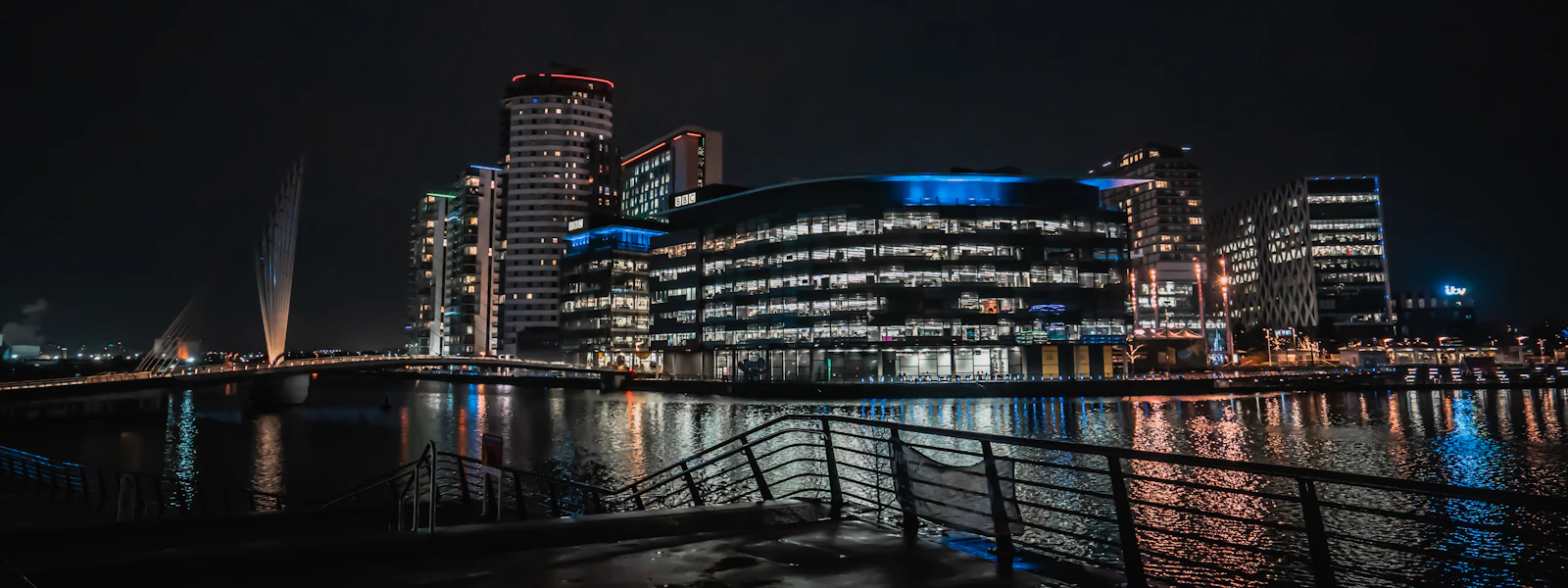
UK CITY GUIDE
Study in Manchester
Manchester is the cultural and economic heart of the North West and one of the UK's most student-friendly cities. The city has a population of around 580,000 but a metropolitan area of more than 2.8 million, and student numbers exceed 100,000 across the University of Manchester, Manchester Metropolitan, the Royal Northern College of Music, the University of Salford and several specialist colleges — making it home to one of Europe's largest concentrated student populations. Lower cost of living than London, world-class public transport, two Premier League football clubs and a famously open, diverse culture have made Manchester a top destination for international students. AEN's Manchester partners run regular intakes throughout the year.
69 courses currently available in Manchester — browse them all →
Quick facts about Manchester
Why study in Manchester?
The University of Manchester is consistently ranked in the world's top 30 (and the UK top 10), with particular strength in engineering, computer science, business, medicine and physics — it is the largest single-site university in the UK and is the only place where graphene was first isolated. Manchester Metropolitan University (MMU) is one of the largest universities in the UK, with renowned programmes in business, fashion, sport and education. The Royal Northern College of Music is one of Europe's leading conservatoires, and Salford has a major specialism in media production, with its MediaCityUK campus next door to BBC North and ITV. AEN partners in the city include UGM Manchester, offering Foundation Year and pathway routes into degree-level study. Beyond rankings, Manchester is the UK's most credible alternative to London for graduate employment in tech, media and professional services — Booking.com, GCHQ, AutoTrader, the BBC and most major UK banks have significant Manchester offices. The Oxford Road corridor, which runs through both main university campuses, is among the busiest student-life areas in Europe.
Cost of living
Manchester is meaningfully cheaper than London while feeling like a major international city. Budget £900-£1,200 a month for 2026. A room in a shared house in Fallowfield or Withington typically costs £550-£750, while purpose-built student accommodation closer to campus and the city centre runs £750-£1,000 a month with bills included. Food shopping at Lidl, Aldi or Manchester's Curry Mile supermarkets comes in at £160-£220 a month. Transport on the Bee Network — the integrated bus and tram system — is around £35 a month for a student MyTicket, or £19 for a 4-week bus-only pass. Mobile, broadband (often included in PBSA), gym and books typically add £70-£100. Social spending of £120-£200 covers eating out, gigs in the Northern Quarter, cinema and weekend trips. Part-time work in hospitality, retail or on-campus is widely available and helps balance the budget.
Where to live as a student
Fallowfield
Fallowfield is the largest student neighbourhood in the UK and the heartland of Manchester's undergraduate culture — packed with shared houses, supermarkets, kebab shops and a famous Friday-night atmosphere. The 142 and 143 bus services run constantly into the universities and city centre. Rooms in shared houses typically £500-£700 a month, with PBSA on Owens Park Way and Wilmslow Road slightly higher.
Withington & Didsbury
Just south of Fallowfield, Withington and Didsbury are quieter, leafier and more aspirational — popular with postgrads, mature students and second/third-years who want a calmer life. Independent cafes, proper pubs, and the Fletcher Moss Botanical Gardens make these neighbourhoods feel more like villages. Expect £550-£800 a month for a room in a shared house, with West Didsbury slightly more expensive.
Northern Quarter & City Centre
The Northern Quarter is Manchester's creative heart — independent record stores, vintage shops, craft beer and the best food scene in the city. Living centrally suits students at MMU and those wanting walk-to-everything convenience. Modern PBSA towers across the city centre and Salford Quays run £700-£1,050 a month with bills included, Wi-Fi, gym and study rooms typically bundled in.
Getting around
Manchester runs on the Bee Network — Greater Manchester's integrated transport system, the first of its kind outside London. The Metrolink tram system is the largest in the UK and links Salford Quays, MediaCityUK, the airport, Bury and Altrincham with the city centre; buses are fully franchised and the network is steadily integrated under a single ticket. A 4-week student MyTicket costs around £35 and covers buses and trams across Greater Manchester. The Oxford Road corridor running between both universities and the city centre is famously the busiest bus corridor in Europe, with buses every minute or two in peak hours. Cycling is improving fast — the city centre is compact and the new Bee Network cycle routes are joined-up. Manchester Piccadilly Station puts you in London in just over two hours, Liverpool in 35 minutes, Leeds in 50 minutes, and Edinburgh or Glasgow in around three hours. Manchester Airport, served by direct trains from the city centre in 20 minutes, flies non-stop to most of the world.
Student life in Manchester
Manchester's student life is built around music, football, food and the city's famously friendly attitude. The music heritage runs from Joy Division and The Smiths to Oasis and The 1975, and the live scene is still one of the strongest in Europe — venues from the Manchester Arena and Co-op Live (the UK's biggest indoor arena) down to grassroots clubs in the Northern Quarter and Salford. Football culture is unavoidable: Manchester United and Manchester City both play in the city, and matchdays shape weekends in obvious ways. The food scene is exceptional and unusually affordable: the Curry Mile in Rusholme for Pakistani and Bangladeshi cuisine, Chinatown for dim sum, Ancoats for new Italian, the Northern Quarter for global street food, and a rapidly growing East Asian scene. Parks include Heaton Park (one of Europe's biggest), Platt Fields next to Fallowfield, and the Peak District National Park reachable by train in under an hour for hiking. Sports facilities at both universities are excellent, with elite-level athletics, swimming and rugby provision. Cultural infrastructure is strong: Manchester Art Gallery, HOME (independent cinema and theatre), the Whitworth, and a thriving spoken-word and comedy scene. Most international students describe the city as warmer and more welcoming than expected.
Famous landmarks & things to see
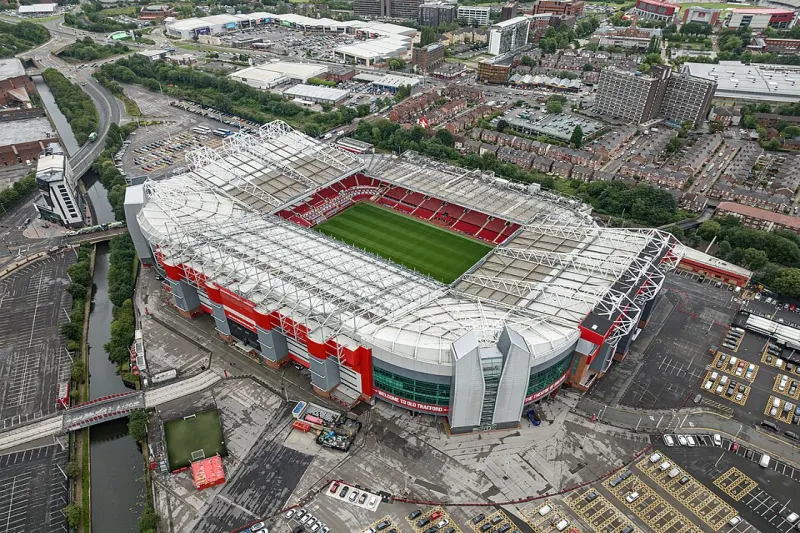
Old Trafford and the Etihad Stadium
Manchester United's 75,000-capacity Old Trafford and Manchester City's Etihad Stadium together host more Premier League football than any other city, with matchday tours running year-round.
Photo: Wikimedia Commons
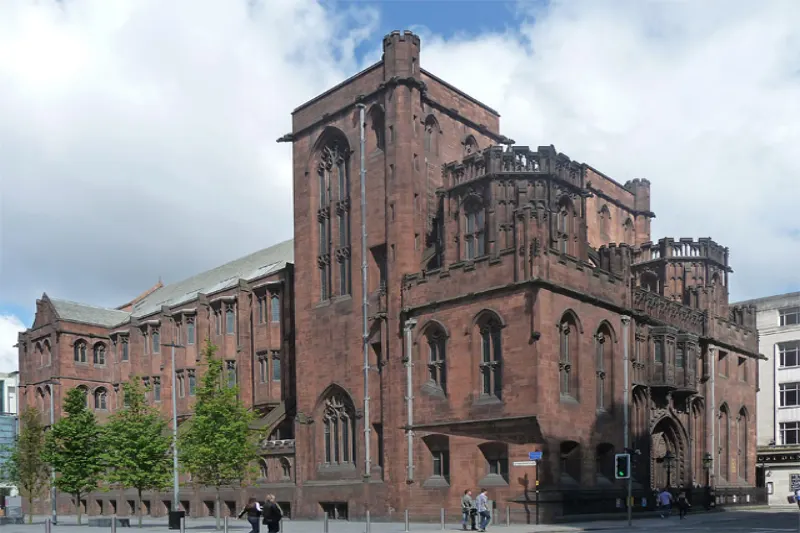
John Rylands Library
A neo-Gothic library on Deansgate opened in 1900 by Enriqueta Rylands in memory of her husband — free to visit and home to one of the world's most important manuscript and rare-book collections.
Photo: Wikimedia Commons
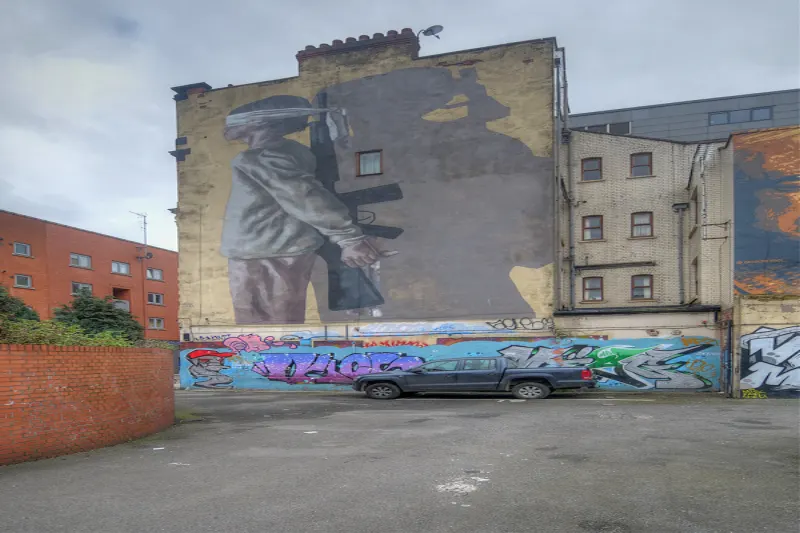
Northern Quarter street art
The streets around Stevenson Square are covered in large-scale murals refreshed regularly by international and local artists, making the Northern Quarter one of the UK's leading outdoor galleries.
Photo: Wikimedia Commons
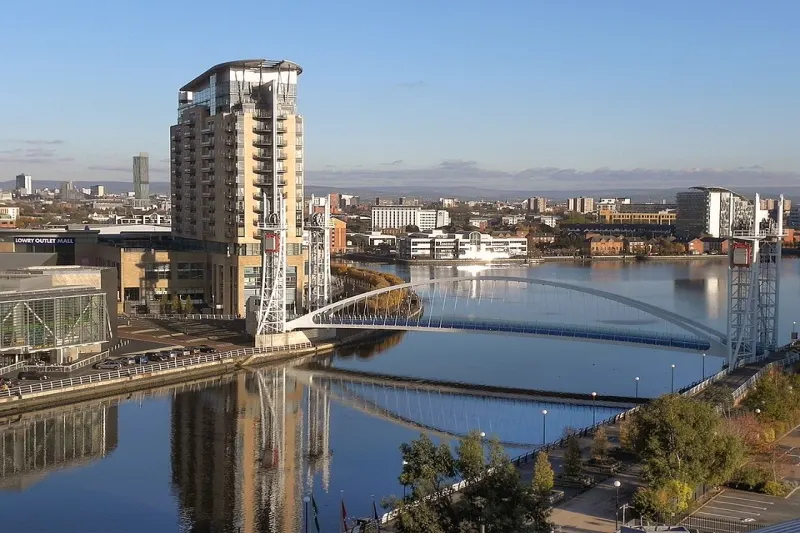
Salford Quays and the Lowry
The redeveloped docks west of the city centre house MediaCityUK, the Lowry arts centre, the Imperial War Museum North (designed by Daniel Libeskind) and a growing student-friendly waterside scene.
Photo: Wikimedia Commons
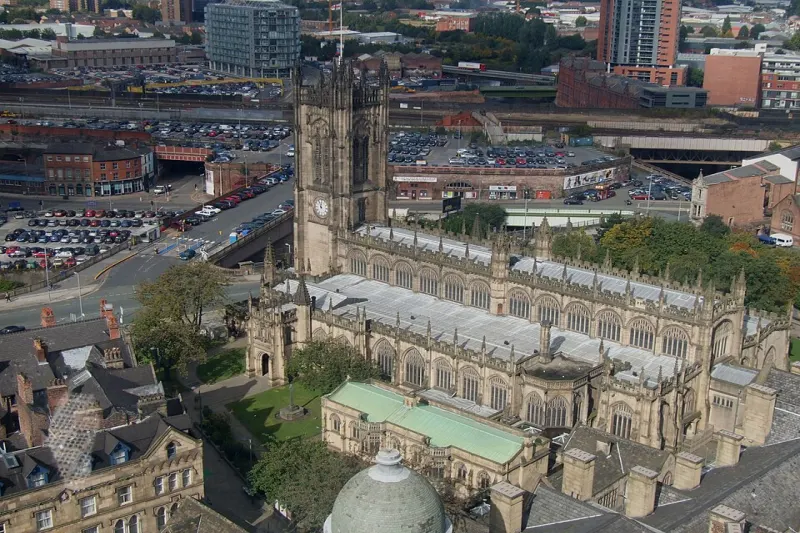
Manchester Cathedral and the Medieval Quarter
A 600-year-old cathedral at the heart of Manchester's oldest streets, surrounded by Chetham's Library (the oldest free public library in the English-speaking world, founded 1653) and the Corn Exchange.
Photo: Wikimedia Commons
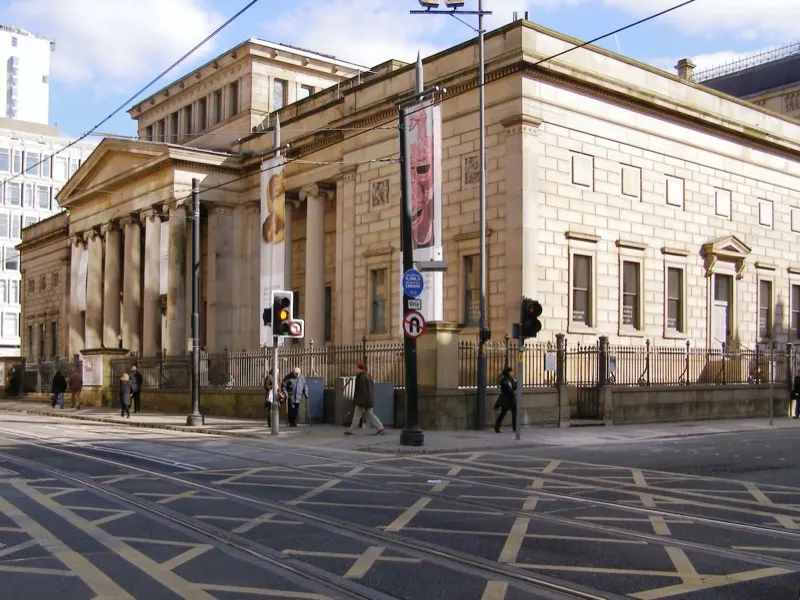
Manchester Art Gallery
Free entry to one of the UK's most important regional collections — Pre-Raphaelite paintings, modern British art and a popular programme of contemporary exhibitions. Set in a neoclassical Mosley Street building right next to Piccadilly Gardens.
Photo: Wikimedia Commons
Major industries & employers
Technology and digital
MediaCityUK is home to BBC North, ITV Granada and Kellogg's UK HQ; Spinningfields hosts AutoTrader, Booking.com and the National Cyber Force, making Manchester the UK's leading tech employer outside London.
Advanced manufacturing and materials
The University of Manchester's National Graphene Institute and Henry Royce Institute anchor a national centre for advanced materials, with industrial links across aerospace, energy and electronics.
Life sciences
Citylabs on the Oxford Road corridor is a fast-growing biomedical cluster around Manchester Royal Infirmary, with employers including Qiagen, Health Innovation Manchester and a deep clinical-trials base.
Financial and professional services
Spinningfields houses regional offices for all the Big Four accountancy firms, the largest legal sector outside London, and major banks including HSBC, Barclays and the Co-operative Bank.
E-commerce and creative
boohoo, THG and Missguided are headquartered in Manchester, alongside a dense network of creative agencies, music labels and post-production studios serving the BBC and ITV.
Music and live entertainment
Manchester's deep live-music heritage continues to support significant employment in venues, recording studios and the wider music economy, anchored by Co-op Live, AO Arena and dozens of independent venues.
Annual events & festivals
Manchester International Festival
July, every two years
A biennial festival of new commissions across music, theatre, dance and visual art, staged in venues including the new £240m Aviva Studios — one of the most ambitious arts events in Europe.
Manchester Pride
August Bank Holiday weekend
One of the UK's largest Pride events, centred on the Gay Village around Canal Street, with a parade, music festival and four days of community programming attracting more than 200,000 visitors.
Parklife Festival
Mid-June
A two-day music festival in Heaton Park each summer drawing 80,000 people a day — one of the UK's biggest urban music festivals and a staple of Manchester student life.
Manchester Christmas Markets
Mid-November to just before Christmas
Hundreds of stalls spread across Albert Square, St Ann's Square, Piccadilly Gardens and Exchange Square — the largest Christmas markets in the UK by visitor numbers.
Manchester Half Marathon
Mid-October
One of the UK's largest half marathons, with 25,000+ runners on a flat course through the city's southern suburbs.
Manchester Food and Drink Festival
Late September to early October
Two-week celebration of the city's food scene with markets, supper clubs, restaurant deals and an annual awards ceremony recognising the best chefs and bars.
Top subjects in Manchester
Business & Management
Alliance Manchester Business School (University of Manchester) is among the UK's top business schools, with strong employer links to consultancies, banks and tech firms with northern hubs.
Computing & AI
Manchester is the historic home of computing — Alan Turing worked here — and today hosts major employers including AutoTrader, Booking.com and the National Cyber Force. CS graduates are in high demand.
Music
The Royal Northern College of Music is a world-leading conservatoire, and the wider city offers an unrivalled live-music ecosystem for performing musicians and music-industry students.
Engineering
The University of Manchester pioneered modern engineering education and now hosts the National Graphene Institute, with industrial links across aerospace, materials and energy.
Health & Medical Sciences
Manchester Royal Infirmary and the city's biomedical campus form one of the largest clinical-academic environments in Europe — strong opportunities for medicine, nursing and biosciences students.
FAQ — studying in Manchester
Why do so many international students choose Manchester?
Manchester combines academic strength with a more relaxed and affordable lifestyle than London. The University of Manchester is consistently in the world's top 30 and the city has a deep student culture — over 100,000 students live within a few miles of each other along the Oxford Road corridor, which creates a real student community. Living costs are around 30% lower than London, the public transport is excellent and increasingly integrated under the Bee Network, and the city is famously open and diverse with strong South Asian, Chinese, Caribbean and African communities. For students who want a major UK city experience without London's pace or price tag, Manchester is the most popular alternative — and AEN's partners offer flexible entry points across the year.
Which Manchester institutions does AEN work with?
Our direct Manchester partner is UGM Manchester, which offers Foundation Year and pathway programmes designed for international students who need an academic bridge into UK university-level study. From a UGM pathway, students can progress into degree-level programmes at partner universities across the UK. We also help students apply to Manchester-based provision at several of our nationwide partners — please get in touch with our admissions team for the most current list of available Manchester courses and intakes. Many programmes here run two or three intakes per year (September, January, and sometimes May), giving you flexibility if you need to start outside the standard September window.
What is the weather actually like in Manchester?
Manchester has a reputation for rain, and the reputation is partly fair — the city sees around 150 rainy days a year, which is higher than London's 110. But the rain tends to be light and intermittent rather than dramatic, and temperatures are mild year-round (average 1-7°C in winter, 12-20°C in summer). The city rarely gets snow, freezes for long, or sees extreme heat. For international students from warm climates, the cold and wet can feel intense at first; invest in a proper waterproof jacket, sturdy shoes and an umbrella before you arrive. Most students adapt within a few weeks and find the city very liveable — and on a clear day, with the Peak District visible from the city, Manchester is beautiful.
Is it easy to find part-time work in Manchester?
Yes — Manchester has one of the strongest part-time student job markets in the UK outside London. The hospitality, retail and warehousing sectors all recruit heavily, and both universities offer well-paid on-campus roles (ambassador, library assistant, research support, IT helpdesk). With a UK Student visa you can usually work up to 20 hours a week during term and full-time during vacations, subject to the conditions on your BRP. The National Living Wage gives you a guaranteed minimum, and many city-centre bars and restaurants pay above that. We always advise prioritising your studies in the first term — working long shifts while adapting to UK academic culture is the most common cause of failed modules — but a 10-15 hour weekly job is realistic for most students from term two onwards.
Your next step
Ready to start your application in Manchester?
Talk to an AEN advisor — we'll match you to the right course, check your eligibility, and walk you through the application step by step.
- Completely free for students
- British Council certified advisors
- 7 days a week, 14 languages
Average response time: under 30 minutes during business hours.