Career path
How to become an Optometrist in the UK
Optometrists are primary-care eye specialists — examining eyes, diagnosing visual conditions, prescribing corrective lenses and increasingly running enhanced clinical services for cataracts, glaucoma and macular degeneration. UK optometry has expanding clinical scope and strong sponsor-visa support across the major optical chains.
- Salary range£40K – £80K
- Demand levelHigh
- Training time3 yr BSc + 1 yr pre-reg
- Visa eligibilitySkilled Worker / Health & Care Worker
What does a Optometrist do?
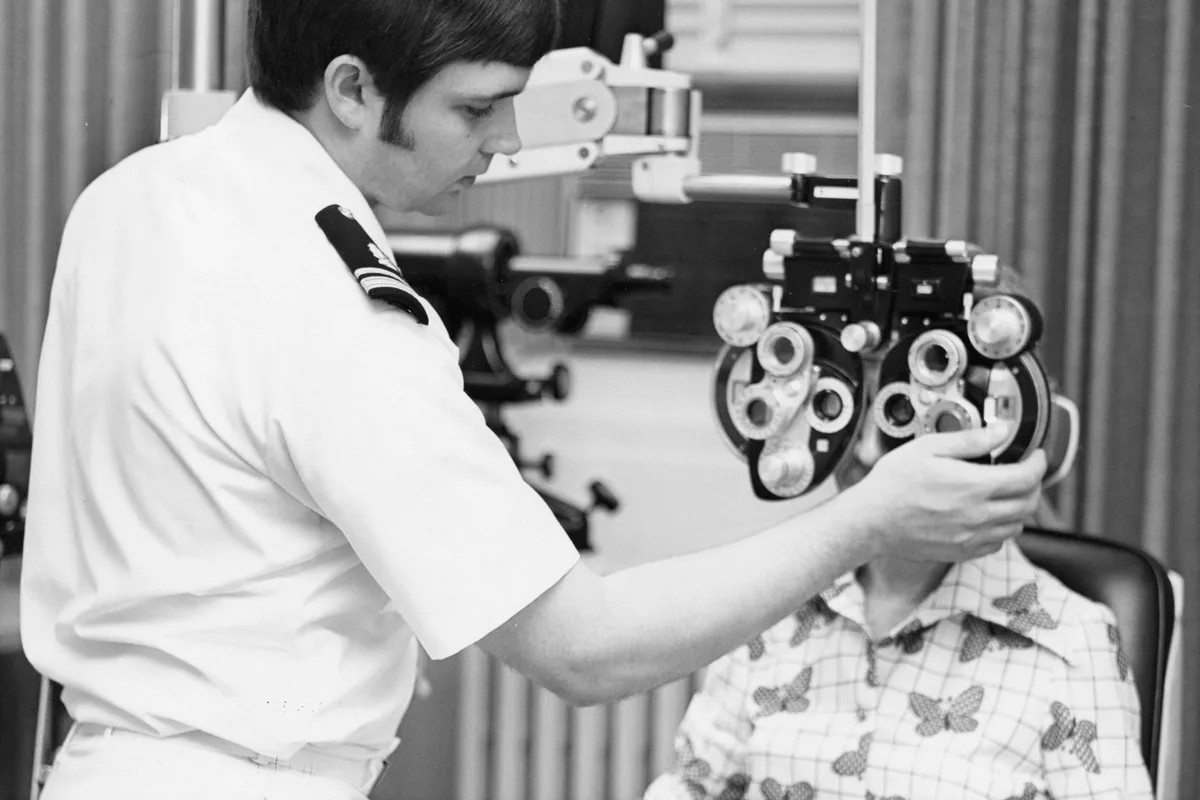
Optometrists are first-contact eye-care professionals. Day-to-day work mixes comprehensive eye examinations, refractions for spectacles and contact lenses, ocular health assessment (slit lamp, fundus imaging, OCT), referral decisions for ophthalmology and increasingly enhanced clinical services (Minor Eye Conditions Service, post-cataract reviews, glaucoma monitoring). Most UK optometrists work for the major optical chains (Specsavers, Vision Express, Boots Opticians) — a smaller community works independently or in hospital eye departments. All UK optometrists register with the General Optical Council (GOC).
- Examine eyes and diagnose visual and ocular health conditions
- Prescribe corrective lenses, contact lenses and refer for hospital eye services
- Specialise into hospital optometry, glaucoma, paediatric or independent prescribing
- Work for Specsavers, Vision Express, Boots Opticians, independent practices and hospital eye services
UK salary ranges
UK Optometrist pay is consistently strong from day one — high street chains pay newly qualified optometrists £45,000–£55,000, rising to £65,000+ for experienced clinicians with strong commercial productivity. Hospital optometrists follow NHS Agenda for Change bands. Independent prescribing optometrists earn at the top of the scale.
London adds 10–15% to optometry pay. Practice ownership / partnership can multiply income substantially — UK independent practice owners typically earn £80,000–£200,000+ with successful businesses. Domiciliary (home-visit) optometry pays premium hourly rates.
Typical entry routes
MOptom — 4 years (integrated)
The dominant UK route. A 4-year integrated master's in Optometry combining the MOptom + pre-reg year at GOC-accredited universities (Cardiff, Manchester, Bradford, Aston, City, Plymouth, Hertfordshire, Anglia Ruskin).
BSc Optometry + separate pre-reg — 4 years total
Older route — 3-year BSc Optometry followed by a separate 12-month paid pre-registration year. Some universities still offer this pathway.
Overseas-qualified GOC pathway
For optometrists qualified abroad. The GOC has structured routes for EU, Australian, New Zealand and Hong Kong-trained optometrists. Other applicants take the Scheme for Registration assessment route.
Dispensing Optician → Optometrist conversion
Qualified Dispensing Opticians (a separate GOC profession) can convert to Optometrist via the standard university route — some receive exemptions.
Skills you'll need
Technical skills
- Refraction (spectacle and contact lens prescription)
- Ocular health assessment (slit lamp, fundus, OCT)
- Tonometry and visual field analysis
- Pharmacology of ocular conditions
- Independent Prescribing (IP) for senior optometrists
- Practice management software (Optix, Acuitas)
Behavioural skills
- Clear chair-side patient communication
- Commercial awareness (high-street optometry is retail + clinical)
- Attention to detail across complex eye health
- Teamwork with dispensing opticians and ophthalmologists
- Cultural competence with diverse patient groups
- Ethical decision-making (GOC Standards)
Major UK employers
Specsavers
The UK's largest optical retailer — over 1,000 stores nationally. Strong graduate intake and structured progression to Director of Optometry.
Vision Express
Major UK high-street chain — substantial graduate optometry intake and clinical training programmes.
Boots Opticians
Boots-branded optical practices across the UK — combines NHS sight test contract with private retail.
Independent practices
UK independent optometry practices — typically smaller cohorts, faster progression to partnership / ownership, deeper clinical focus.
Hospital eye services
NHS hospital ophthalmology departments employing optometrists alongside ophthalmologists — glaucoma clinics, post-cataract reviews, paediatric optometry.
Domiciliary optometry
Home-visit optometry services for housebound patients (OutsideClinic, Visioncall). Strong work-life balance with premium hourly pay.
Career progression
- Year 1 (pre-reg)
Pre-Registration Optometrist
Complete a 12-month paid pre-registration year — supervised practice with structured competency assessments and Stage 1/2 GOC exams.
- Years 1-3
Newly Qualified Optometrist
Settle into a high-street chain or independent practice. Build clinical confidence and consider specialty pathways.
- Years 3-5
Optometrist / Practice Manager
Take on practice management responsibilities or move into Independent Prescribing (IP) qualification or hospital optometry.
- Years 5+
Senior / IP Optometrist / Director
Run enhanced clinical services, lead a practice, or buy into an independent partnership. Highest UK optometry pay sits at practice ownership.
Who you are matters — pick your path
For international students
- UK visa route
- Skilled Worker visa (Health & Care Worker for NHS-employed optometrists)
- Salary vs visa threshold
- Optometrist pay (£45,000+ newly qualified) clears the standard Skilled Worker visa threshold comfortably. Hospital optometrists employed by NHS Trusts qualify for the Health & Care Worker visa with lower fees.
- Sponsor licence density
- High — All major UK optical chains (Specsavers, Vision Express, Boots Opticians) hold Skilled Worker sponsor licences and routinely sponsor international optometrists. NHS hospital eye services also sponsor. Smaller independent practices often don't hold licences.
- Graduate Route considerations
- UK MOptom graduates use the Graduate Route to complete pre-registration and start as an optometrist, then switch to Skilled Worker visa once registered.
- English-language requirements
- The GOC requires IELTS 7.0 overall with no sub-score below 6.5 (or OET equivalent). UK universities typically ask the same for MOptom entry.
For UK & Settled-Status students
- Student loan ROI
- MOptom 4-year tuition is ~£38,140 under Plan 5 loans. With newly qualified pay at £45,000–£55,000, repayments comfortably manageable. Strong ROI from Year 2 onwards.
- Apprenticeship vs degree
- Optometry Apprenticeship (Level 7) is a relatively new route — fully employer-funded with a paid trainee salary. Major chains (Specsavers) are scaling these cohorts each year.
- UCAS timeline
- Optometry undergraduate applications go through UCAS with the January deadline. Most UK schools ask AAB–AAA at A-level including Biology and Maths or Physics. Strong personal statements with shadowing experience heavily weighted.
- Industry placements
- MOptom programmes include clinical placement work alongside academic study. The 12-month post-MOptom pre-registration year is a paid clinical role with structured GOC competency assessments.
- Regional salary differences
- London adds 10–15% to optometry pay. UK optometry pay scales more evenly across regions than tech or finance. Practice ownership / partnership can multiply income substantially regardless of UK region.
UK degree courses that lead to this career
AEN partners with these UK universities and colleges offering courses on the optometrist pathway:
See all courses in this field: Optometry →
FAQ — Becoming a Optometrist in the UK
How long does it take to become an Optometrist in the UK?
4 years total — a 4-year integrated MOptom degree (or 3-year BSc + separate 1-year pre-reg) plus GOC Stage 1 / Stage 2 assessments. Most UK optometry schools now offer the integrated MOptom pathway.
What's the difference between an Optometrist and an Optician?
Optometrists examine eyes, diagnose visual and ocular conditions, and prescribe corrective lenses (GOC-registered Optometrist). Dispensing Opticians fit and dispense glasses based on an optometrist's prescription (separate GOC profession — different training, 3-year degree).
Is Optometrist on the UK Skilled Worker visa shortage list?
No — but pay clears the Skilled Worker visa threshold comfortably and major UK optical chains sponsor international optometrists routinely.
Can I work as an Optometrist in the UK if I qualified abroad?
Yes — the GOC has structured routes for EU, Australian, New Zealand and Hong Kong-trained optometrists. Other applicants take the Scheme for Registration assessment route.
Which UK optometry schools are best?
Cardiff, Manchester, Bradford, Aston, City University London, Plymouth, Hertfordshire and Anglia Ruskin all offer GOC-accredited MOptom programmes. All are highly regarded and welcome international applications.
Can Optometrists prescribe medication in the UK?
Yes — Independent Prescribing (IP) Optometrists complete an additional GOC-accredited postgraduate qualification (typically 6–12 months) and can then prescribe a defined list of ocular medications. IP optometrists work increasingly in hospital eye services and enhanced community clinics.
Your next step
Ready to start your optometrist journey?
Take the 60-second quiz and we'll match you to UK courses that lead to this career — checked against your eligibility, visa status and budget.
- Free for students
- British Council certified advisors
- 7 days a week, 14 languages
Average response time: under 30 minutes during business hours.