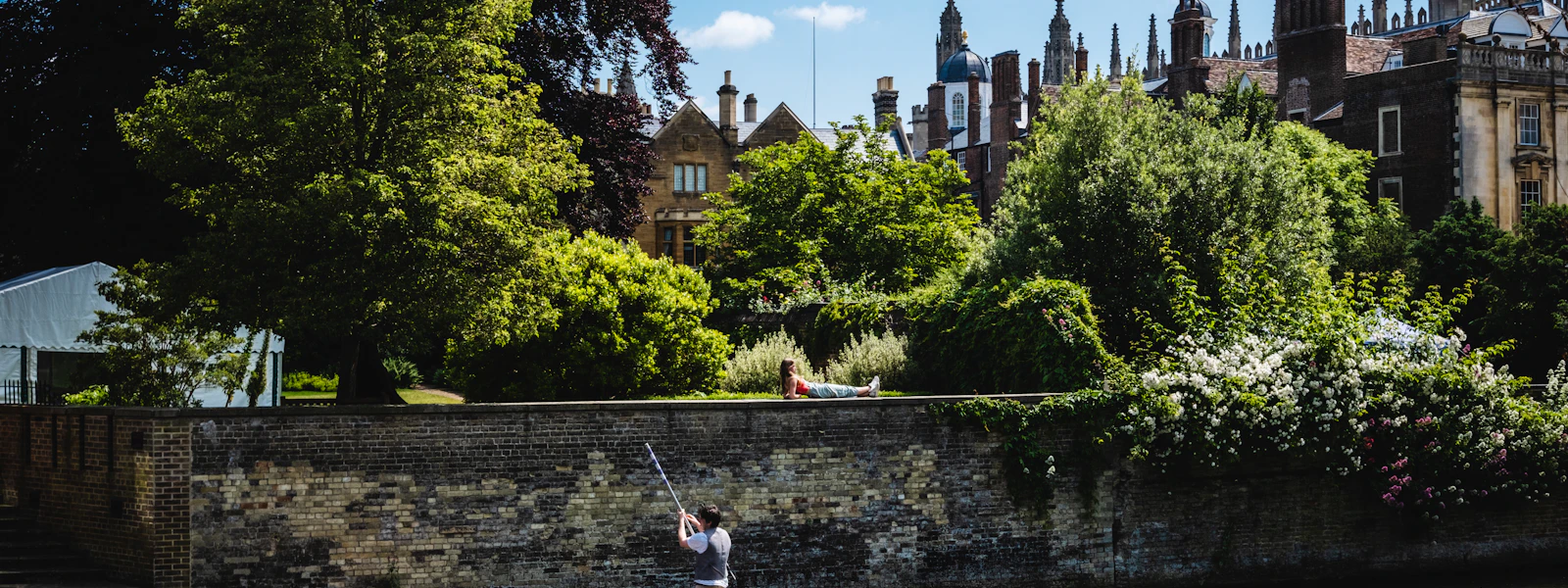
UK CITY GUIDE
Study in Cambridge
Cambridge is one of the most famous university cities in the world — but it is also a working modern city of around 145,000 people, with a student population of more than 30,000 and a global reputation for technology, biotech and finance that extends well beyond the historic colleges. AEN works directly with Anglia Ruskin University (ARU) and Anglia Ruskin University International College (ARUIC), the partner institutions that welcome international students through Foundation Year, undergraduate and postgraduate routes. We do not partner with the University of Cambridge itself. For students who want to live in a small, beautiful, intellectually intense city with strong career outcomes, Cambridge offers something no other UK city can.
75 courses currently available in Cambridge — browse them all →
Quick facts about Cambridge
Why study in Cambridge?
Cambridge's academic landscape has two distinct sides. The historic University of Cambridge with its 31 colleges is one of the world's most prestigious universities — applications are highly competitive and AEN does not handle them. Anglia Ruskin University, the other main university in the city, is a modern teaching-focused institution with a strong international student community and a long track record of welcoming students through pathway programmes. Anglia Ruskin University International College (ARUIC), located on the ARU campus, is AEN's direct partner and runs Foundation Year, Undergraduate Diploma and Pre-Masters routes designed specifically for international students who need an academic and English-language bridge into ARU undergraduate and postgraduate degrees. ARU's strongest programmes include computing, engineering, business and the Cambridge School of Creative Industries, which has a particular reputation for animation, VFX, computer games design and music technology. What makes Cambridge unique academically is the surrounding ecosystem — the Cambridge Science Park, AstraZeneca's global R&D HQ, ARM, Microsoft Research, and the biotech cluster around Addenbrooke's Hospital all sit within a few miles of campus, giving students unusual access to real industry placements and graduate roles.
Cost of living
Cambridge is the second-most expensive city in this set after London, mainly because the housing market is tight. For 2026, budget £1,100-£1,400 a month. A room in a shared house typically runs £650-£900, while purpose-built student accommodation close to the ARU campus comes in at £800-£1,100 a month with bills included. Food shopping at Lidl, Aldi or the Cambridge Market on Market Hill is around £160-£220 a month. Local transport is rarely necessary — Cambridge is famously a cycling city and the centre is small enough to walk across in 20 minutes — but a Stagecoach 4-week bus pass costs around £45 if you want one. A second-hand bike is a much more common solution and costs £80-£200. Mobile, broadband, gym and books add £70-£100. Social spending of £130-£200 covers eating out, cinema, punting, weekend trips to London (45 minutes by train) and student nights at college bars open to the public.
Where to live as a student
City Centre
Living centrally means walking distance to ARU, the river, the market and almost everything you'd want to do in Cambridge. Rooms are scarce and pricey — expect £700-£950 a month for a shared house room, with PBSA pushing toward £1,100. Best for students who want the full Cambridge atmosphere and don't mind paying for it. The historic colleges, museums and main shopping streets are all on your doorstep.
Cherry Hinton & Romsey
Cherry Hinton, two miles south-east of the centre, offers proper Victorian terraces, a good high street and easy cycling routes into the ARU campus (about 15 minutes by bike). Romsey, closer in, is similar but slightly more central and well-connected by bus. Both suit second/third-year students who want more space and lower rents — typically £550-£750 a month for a room in a shared house.
Chesterton
Chesterton sits north of the city centre across the river, with quiet streets, the popular Mitcham's Corner area and good access to the new Cambridge North railway station. Mature students and postgrads tend to gravitate here, and rents are slightly lower than the centre — £600-£800 a month is typical. The cycle commute into ARU is around 15-20 minutes along the river path, one of the more pleasant student commutes in the UK.
Getting around
Cambridge is the UK's most cycle-friendly city by a wide margin — roughly 30% of all trips in the city are made by bike. Buying a second-hand bike on your first weekend (£80-£200 from local shops or Gumtree) is the single most useful thing you can do, and the city has well-developed cycle lanes and traffic-free routes along the river and the Guided Busway. Walking covers most of the rest: the city centre is around a mile across and the ARU campus is a 15-minute walk from the historic centre. Stagecoach buses serve the wider area and the Park & Ride sites; a 4-week student pass costs around £45. Cambridge Station is on the main line to London King's Cross (45 minutes) and London Liverpool Street (75 minutes), making weekend trips trivial. Cambridge North Station, opened in 2017, serves the Science Park and Chesterton. Stansted Airport is 30 minutes by direct train and serves dozens of European destinations.
Student life in Cambridge
Cambridge student life is unique among UK cities. The historic atmosphere — the river, the college courts, the chapels, the meadows — shapes daily life even if you're studying at ARU rather than the University of Cambridge. Punting on the Cam in summer, walking along the Backs in autumn, and ice-skating at the temporary winter rink are seasonal rituals. The food scene is small but improving rapidly, with proper independent cafes around Mill Road, an excellent twice-weekly market on Market Hill, and a small but credible South Asian and Middle Eastern food cluster on Mill Road. Nightlife is genuinely quieter than in Manchester or Leeds — Cambridge is a small city — but the Junction venue hosts touring bands and comedy, several college bars open to the public, and a handful of clubs cater to the student crowd. Cultural life is exceptional for the city's size: the Fitzwilliam Museum is free and world-class, the Cambridge Folk Festival runs every summer, and the universities host hundreds of public talks each term. Sport is well catered for at ARU and through the city's clubs — rowing, in particular, is a defining feature of life on the river. Parks include Jesus Green, Midsummer Common and the meadows, all in central locations. London is 45 minutes away by train for weekend variety.
Famous landmarks & things to see
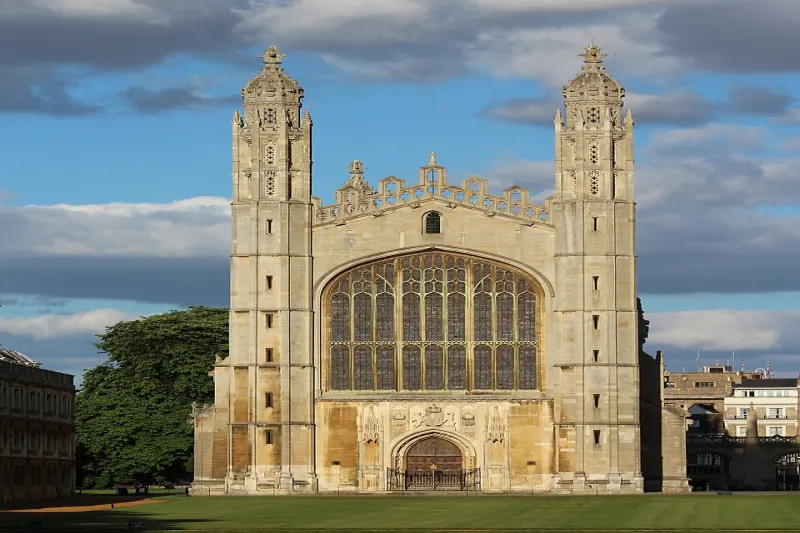
King's College Chapel
The 16th-century Gothic chapel with the world's largest fan vault and a famous Christmas Eve Carol Service broadcast globally by the BBC — open to visitors most afternoons during term.
Photo: Wikimedia Commons
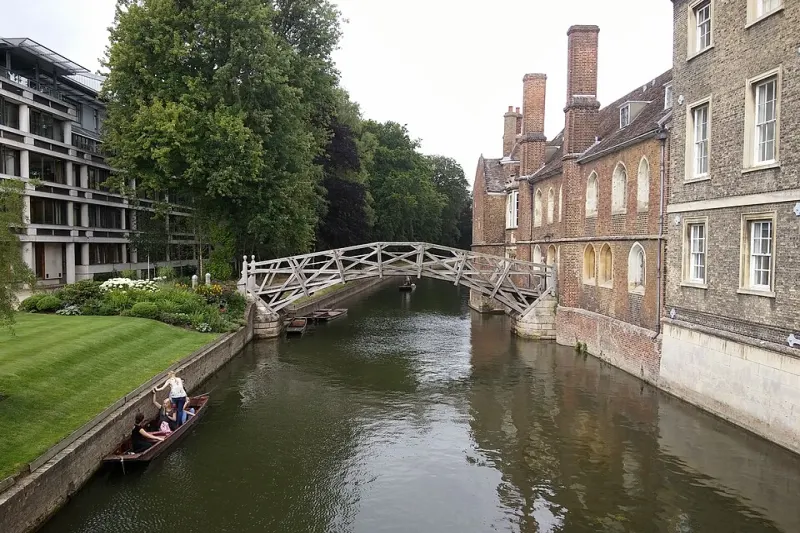
The Mathematical Bridge
An elegant timber footbridge across the Cam at Queens' College, originally built in 1749 to a design that gives the illusion of a curved arch made entirely from straight timbers.
Photo: Wikimedia Commons
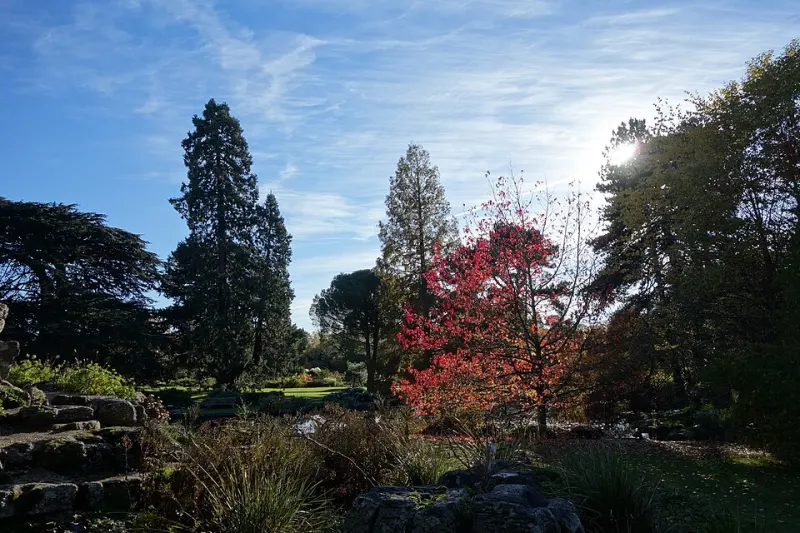
Cambridge University Botanic Garden
Forty acres of plant collections founded by Charles Darwin's mentor John Henslow in 1846, with rare glasshouses and a year-round programme of free public events for students.
Photo: Wikimedia Commons

Fitzwilliam Museum
Free to enter and home to half a million works of art and antiquities including Titians, Rembrandts and a major Egyptian collection — one of the finest small museums in Europe.
Photo: Wikimedia Commons
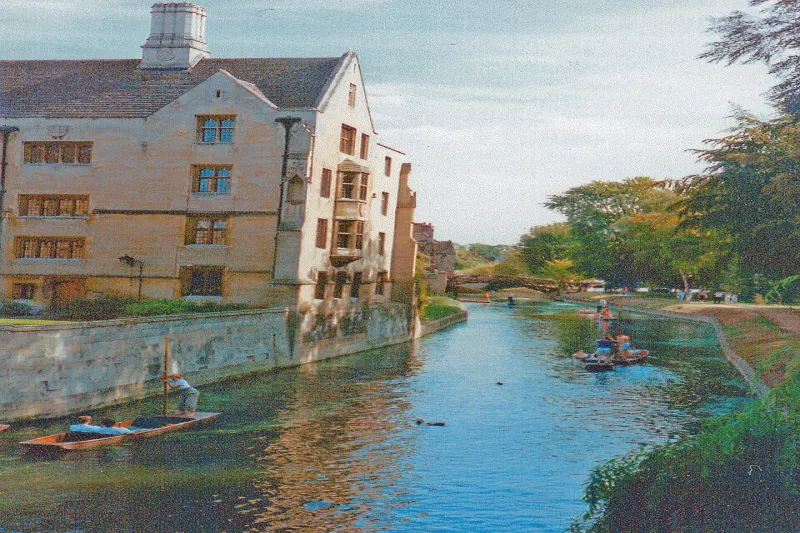
The Backs
The riverside lawns behind the historic colleges (King's, Clare, Trinity, St John's) offer one of the most photographed views in England, especially when seen from a punt on the Cam in summer.
Photo: Wikimedia Commons
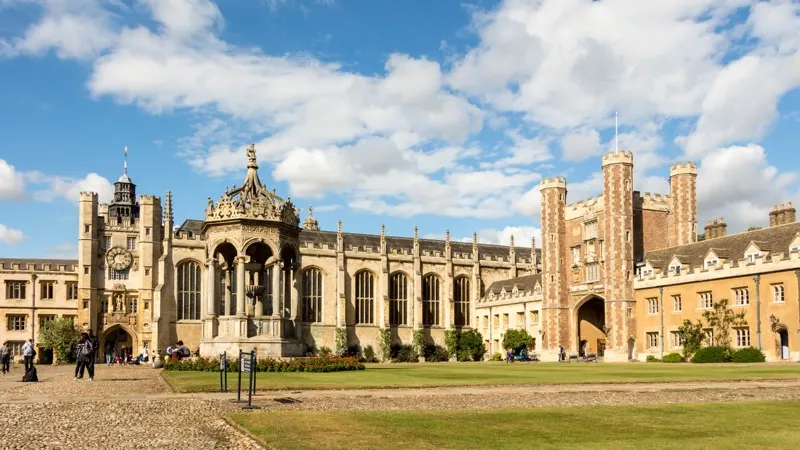
Trinity College and Great Court
The largest college court in Oxbridge — home to Newton, Byron and 34 Nobel laureates. Open to visitors during term and famous for the Wren Library next door (Newton's annotated Principia, Milne's original Winnie-the-Pooh manuscript) and for Chariots of Fire's "Great Court Run" tradition.
Photo: Wikimedia Commons
Major industries & employers
Technology
The Cambridge Cluster supports more than 5,000 technology firms — ARM (semiconductor design), Microsoft Research, Amazon's Alexa team and hundreds of AI start-ups give Cambridge graduates some of the strongest tech employment outcomes in Europe.
Life sciences and biotech
AstraZeneca's global R&D headquarters opened in 2021 next to Addenbrooke's Hospital, anchoring a cluster that includes the MRC Laboratory of Molecular Biology, Babraham Research Campus and Granta Park.
Semiconductor design
Cambridge is the spiritual home of the British semiconductor industry — ARM's processor designs power the majority of the world's smartphones, and dozens of chip-design firms cluster around the Science Park.
Professional services
A dense network of patent attorneys, venture capital firms (Cambridge Innovation Capital, Amadeus) and tech-focused consultancies serves the cluster, opening graduate routes for business and law students.
Education and research
The two universities, the Wellcome-funded research institutes and a long tail of educational publishers (including Cambridge University Press, the world's oldest publisher) are major graduate employers.
Publishing and academic services
Cambridge University Press — the world's oldest publisher — remains based in the city; academic and journals publishing is a meaningful local employer alongside related editing and translation services.
Annual events & festivals
Cambridge Folk Festival
Late July or early August
Held in Cherry Hinton Hall, one of the oldest and most respected folk music festivals in the world, attracting around 14,000 attendees over four days with a strong global folk and world-music line-up.
Cambridge Science Festival
Two weeks in March
The UK's largest free science festival, with hundreds of talks, lab tours and family events across the university's departments — exceptional access to working researchers for students.
May Bumps
Mid-June (despite the name)
The Cambridge college rowing races held over four days on the River Cam, where boats try to 'bump' the boat ahead — one of the city's defining traditions, free to watch from the towpath.
Open Cambridge
Mid-September
A weekend of free guided tours, talks and behind-the-scenes access to colleges, libraries and laboratories normally closed to the public — a unique heritage event for new arrivals.
Cambridge Beer Festival
Late May
One of the largest CAMRA beer festivals in the UK, held on Jesus Green with hundreds of real ales and ciders.
Cambridge Shakespeare Festival
July and August
Eight weeks of outdoor Shakespeare performances staged in college gardens — Trinity, St John's, King's and others — by a professional touring company.
Top subjects in Cambridge
Computing & AI
Cambridge is home to ARM, Microsoft Research, the Cambridge Computer Laboratory, and a dense cluster of AI startups — exceptional placement and graduate-employment outcomes for computing students.
Engineering
The wider Cambridge Cluster supports more than 5,000 technology businesses with strong demand for engineering graduates across electronics, photonics and mechanical engineering.
Animation, VFX & Computer Games
The ARU Cambridge School of Creative Industries runs nationally respected programmes in animation, VFX and computer games design (CGD), with industry-grade studios and links to UK games and animation firms.
Business & Management
Cambridge has a dense network of consultancies, VC firms and high-growth scale-ups, with ARU's business school offering routes into both general management and tech-focused business careers.
Music
ARU's music technology and music performance programmes are well respected, and the wider Cambridge musical environment — choirs, ensembles, festivals — is unusually rich for a city of this size.
FAQ — studying in Cambridge
Does AEN help students apply to the University of Cambridge?
No — we are honest about this. AEN does not have a direct partnership with the historic University of Cambridge (the one with the 31 colleges), and applications there go through UCAS with separate college admissions, the Cambridge admissions assessments, and very competitive entry standards. Our direct partners in Cambridge are Anglia Ruskin University (ARU) and Anglia Ruskin University International College (ARUIC), the modern teaching university and its pathway college. ARU and ARUIC welcome international students through Foundation Year, Undergraduate Diploma, undergraduate degree and postgraduate routes, and we can support those applications end-to-end. Both share the same city — and a lot of the same cultural experience — but they are separate institutions. If your academic goal is the historic University of Cambridge, we can advise but not place.
What is ARUIC and how does it lead into ARU?
Anglia Ruskin University International College (ARUIC) is a pathway college located on the ARU Cambridge campus, designed specifically for international students who need an academic and English-language bridge into ARU undergraduate or postgraduate degrees. Typical routes are an International Foundation Year (leading into year 1 of an ARU undergraduate degree), an International Year One (leading into year 2 of selected undergraduate degrees), and a Pre-Masters (leading into an ARU postgraduate Masters degree). On successful completion of your pathway, you progress directly into the relevant ARU degree on the same campus, with the same student services. Multiple intakes run through the year. AEN works directly with ARUIC and we handle the full application, accommodation and visa support process.
Is Cambridge too small for international students?
Cambridge is small — only around 145,000 people — and you will know your way around within a couple of weeks. For some international students this is exactly the appeal: a beautiful, walkable, intellectually serious city where you can focus on your studies without the overwhelm of a large metropolis. For others used to big-city life it can feel quiet, especially in the evenings during vacation periods. The crucial counter-balance is London — 45 minutes away by direct train — and Stansted Airport, 30 minutes away. Most international students at ARU and ARUIC make regular weekend trips to London for variety, and find that combining the focus of Cambridge during the week with the scale of London at weekends gives them the best of both. The student community itself is genuinely international.
Why is accommodation so expensive in Cambridge?
Cambridge has one of the tightest housing markets in the UK, driven by limited land for development, a large student population, and a substantial Cambridge Cluster workforce in technology and biotech competing for the same housing stock. Demand exceeds supply year-round. The honest practical advice is to book your accommodation as early as possible — ideally as soon as you accept your offer — and to seriously consider purpose-built student accommodation (PBSA) for your first year, where prices are higher but bills, Wi-Fi, security and a guaranteed room are bundled. PBSA also helps you build a social network on arrival. From second year onwards, most students move into shared houses in Cherry Hinton, Romsey or Chesterton with friends they've made, where rents are noticeably lower. AEN's admissions team can advise on specific providers.
Your next step
Ready to start your application in Cambridge?
Talk to an AEN advisor — we'll match you to the right course, check your eligibility, and walk you through the application step by step.
- Completely free for students
- British Council certified advisors
- 7 days a week, 14 languages
Average response time: under 30 minutes during business hours.